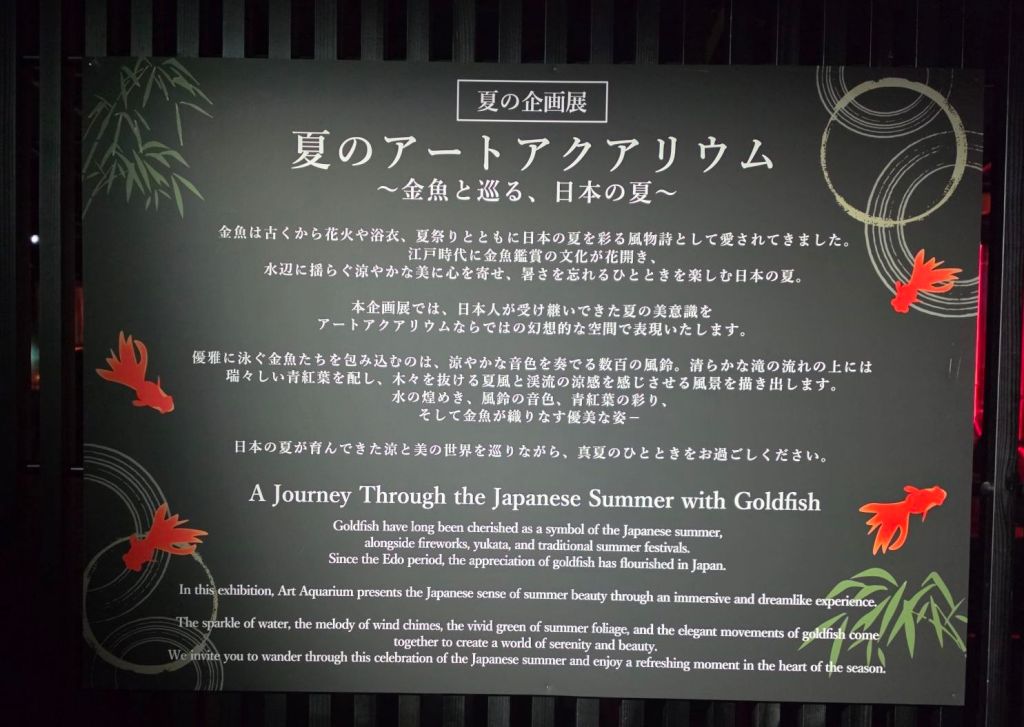
I have always loved the quiet, graceful beauty of goldfish and koi. Their colors, movements, and the meditative calm they bring have fascinated me for years. So, when I heard about the Art Aquarium Museum in Tokyo’s Ginza district, I knew I had to see it. This wasn’t just an aquarium; it was described as a living art exhibit where these beloved fish are the stars in a world of light, music, and Japanese tradition.
A Living Art Gallery
Tucked away on the 8th floor of the prestigious Ginza Mitsukoshi department store, this museum redefines what an aquarium can be. Rather than traditional tanks, the Art Aquarium presents goldfish as masterpieces, displayed within meticulously designed installations that merge traditional Japanese aesthetics with cutting-edge light and sound technology .
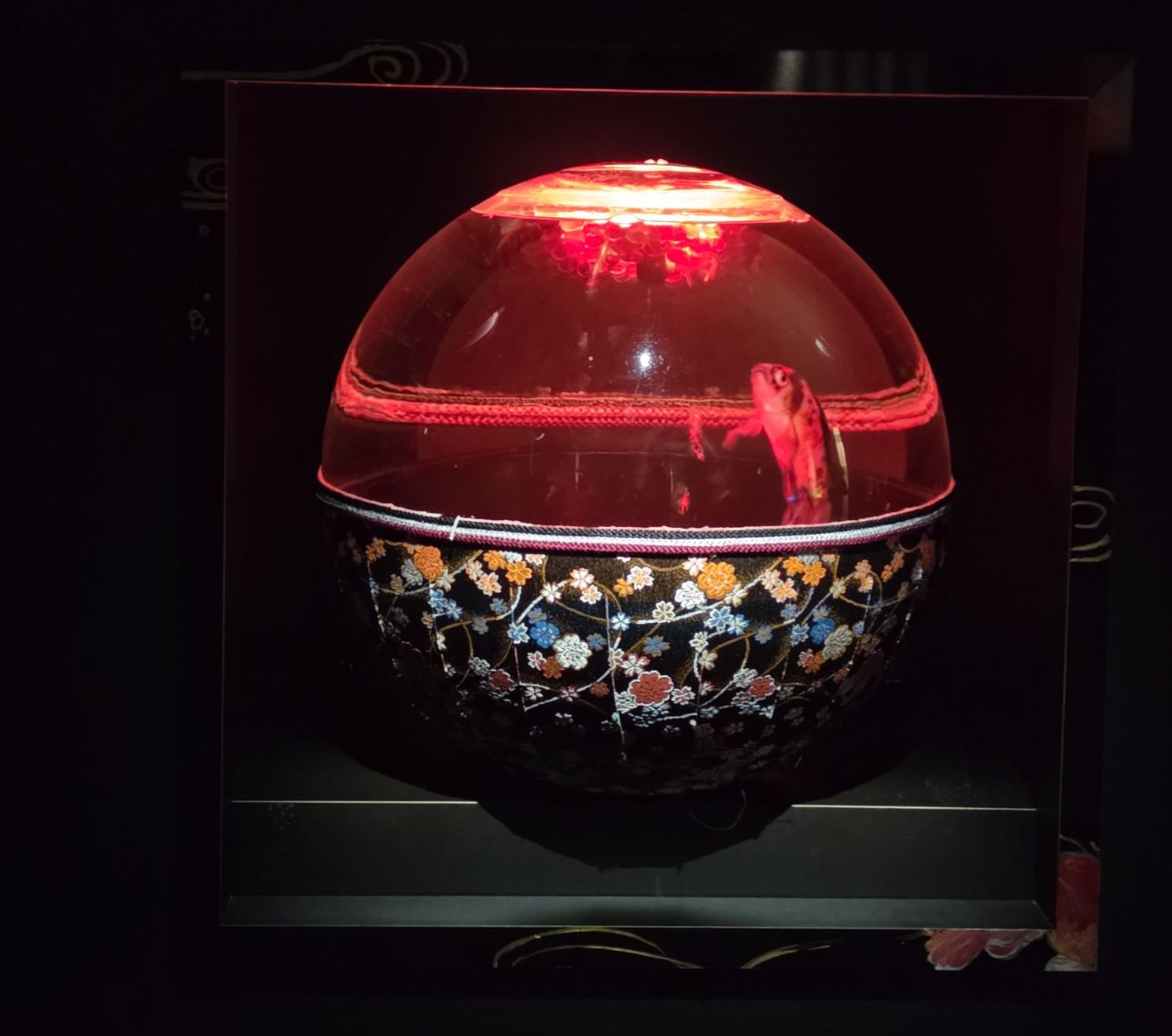
The exhibition is the brainchild of artist Hidetomo Kimura, who has been creating these stunning displays since 2007 . His vision is unique: “I wanted to create an artistic installation which is alive by using real fish, rather than materials or pictures” . With over 12.3 million visitors to date, it’s clearly a vision that resonates with people worldwide .
The Fish Collection: A Kaleidoscope of Life
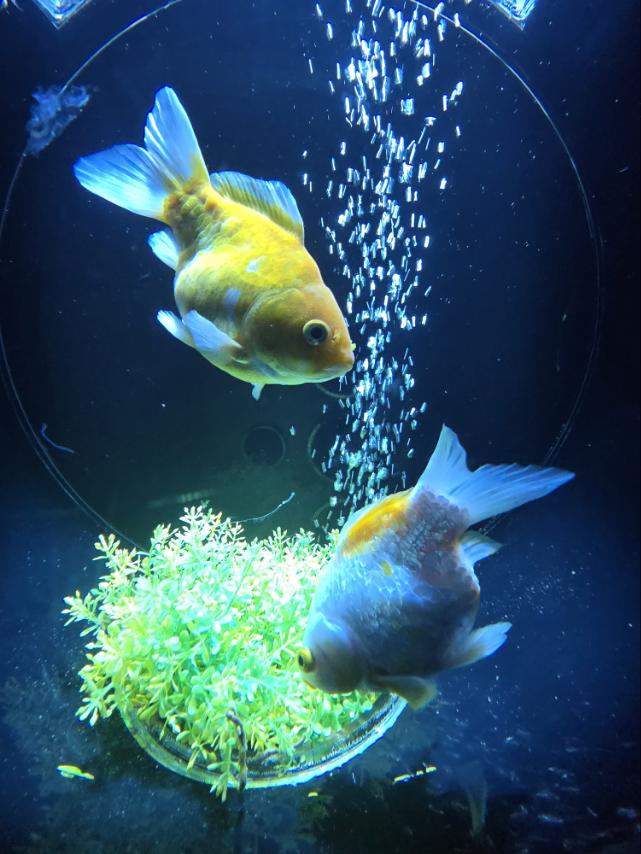
The museum showcases thousands of goldfish, including hundreds of rare varieties and several cross-bred species you won’t find anywhere else . What struck me most was the incredible diversity of colors, shapes, and fin patterns. The exhibitions change with the seasons, so each visit offers something new. During my visit this July, the exhibit theme is “Summer Art Aquarium 2026: A Japanese Summer Journey with Goldfish. The showcase highlights traditional Japanese summer aesthetics combined with vibrant live goldfish displays, light, sound, and scent- yup you heard me correctly scent! This art aquarium is a treat to all our five senses 🙂
The Exhibit Highlights
Walking through the museum feels like stepping through a dream. The Goldfish Corridor immediately caught my attention—long rows of illuminated tanks stretching forward, the fish creating shifting patterns of color and light . The effect was mesmerizing, almost like walking through a tunnel of living stained glass.
The Temaririum
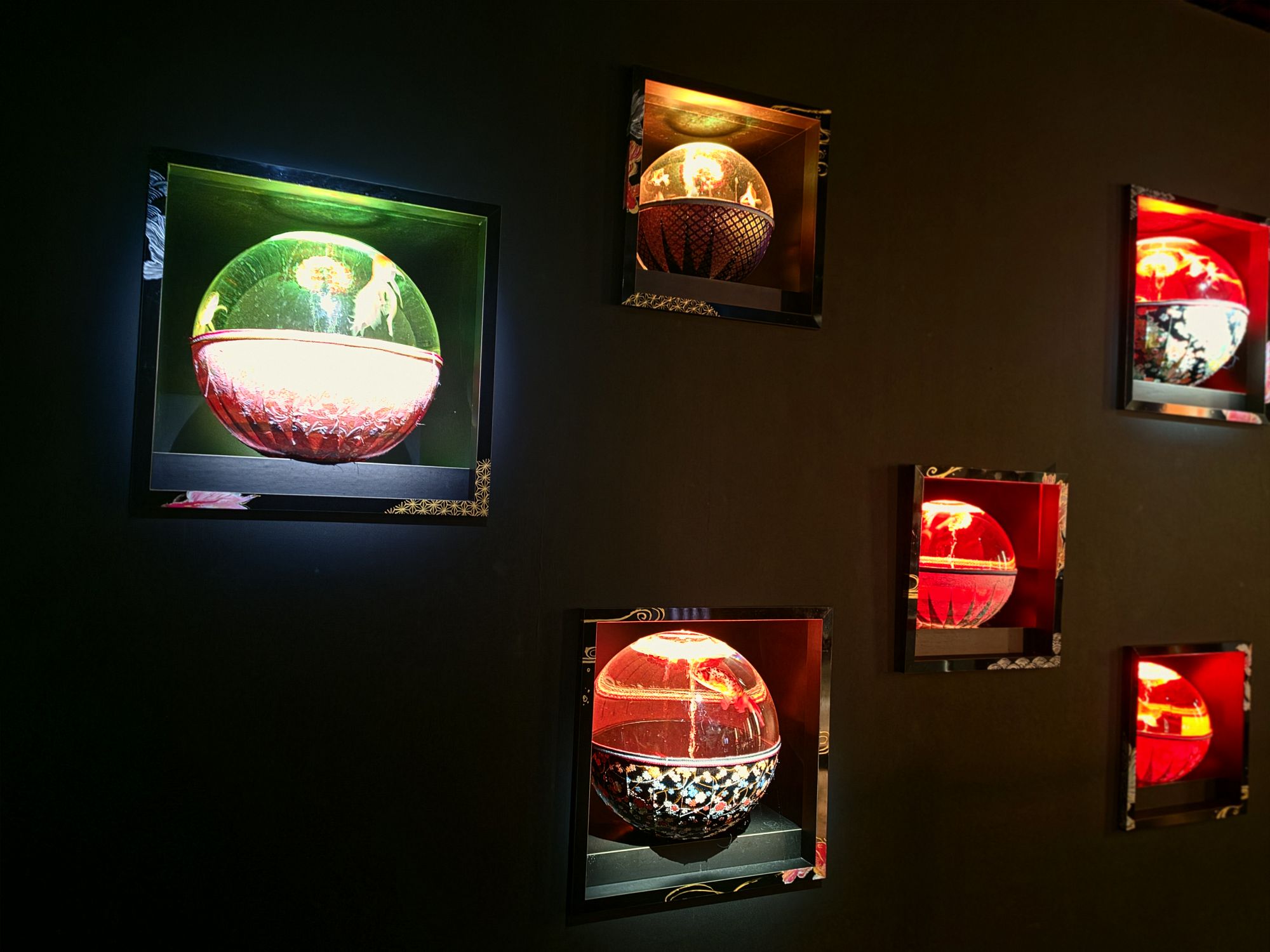
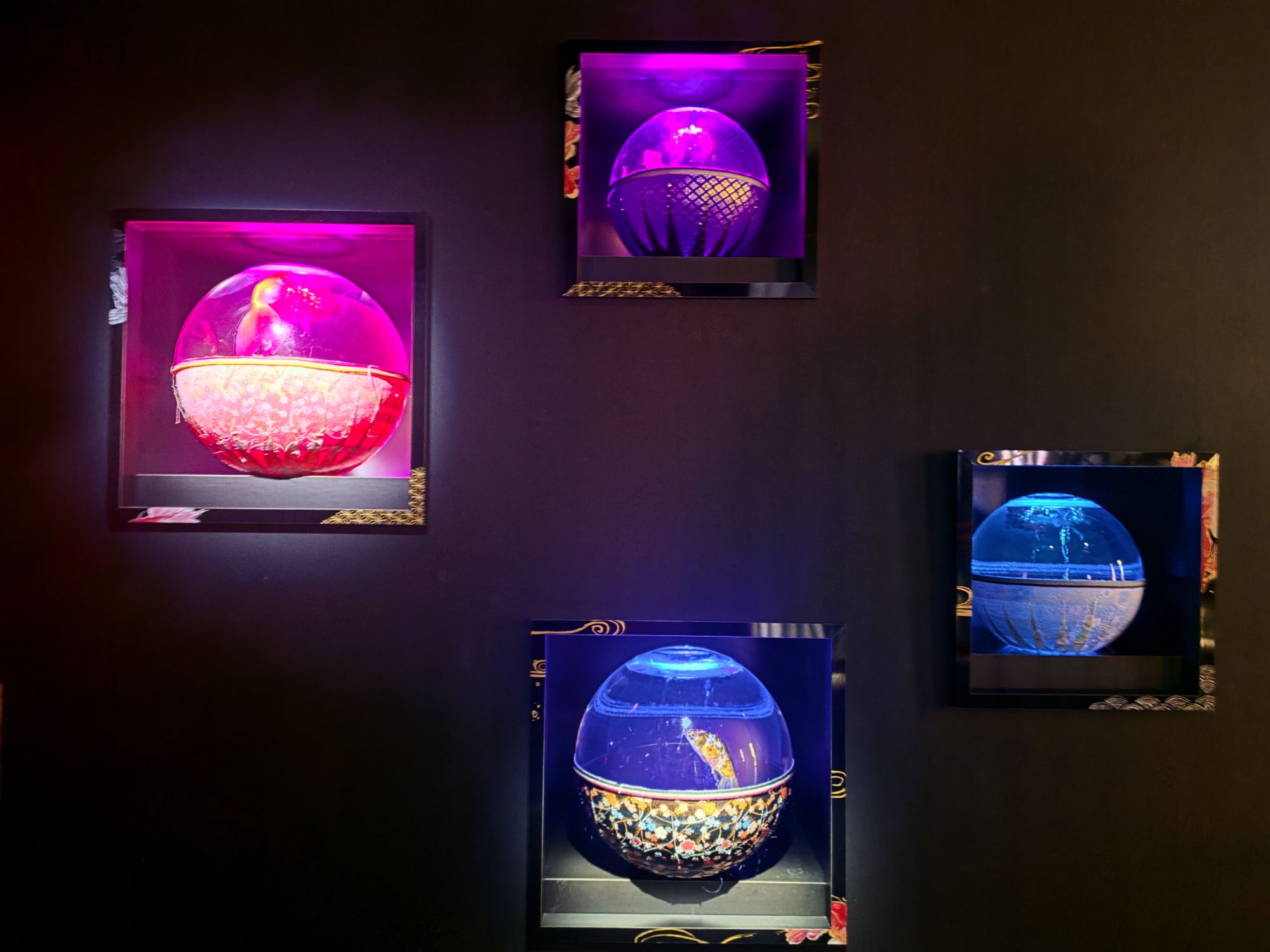
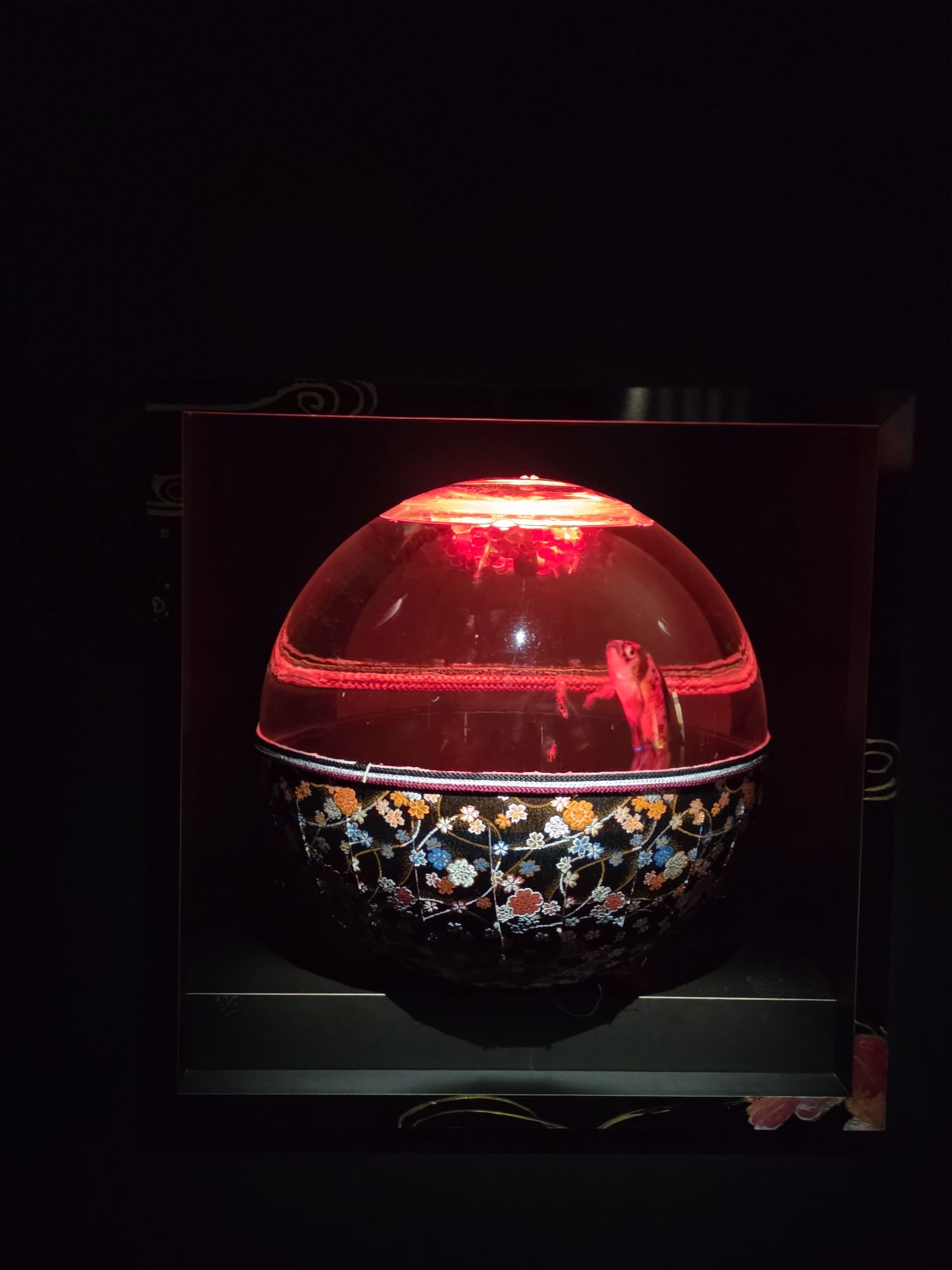
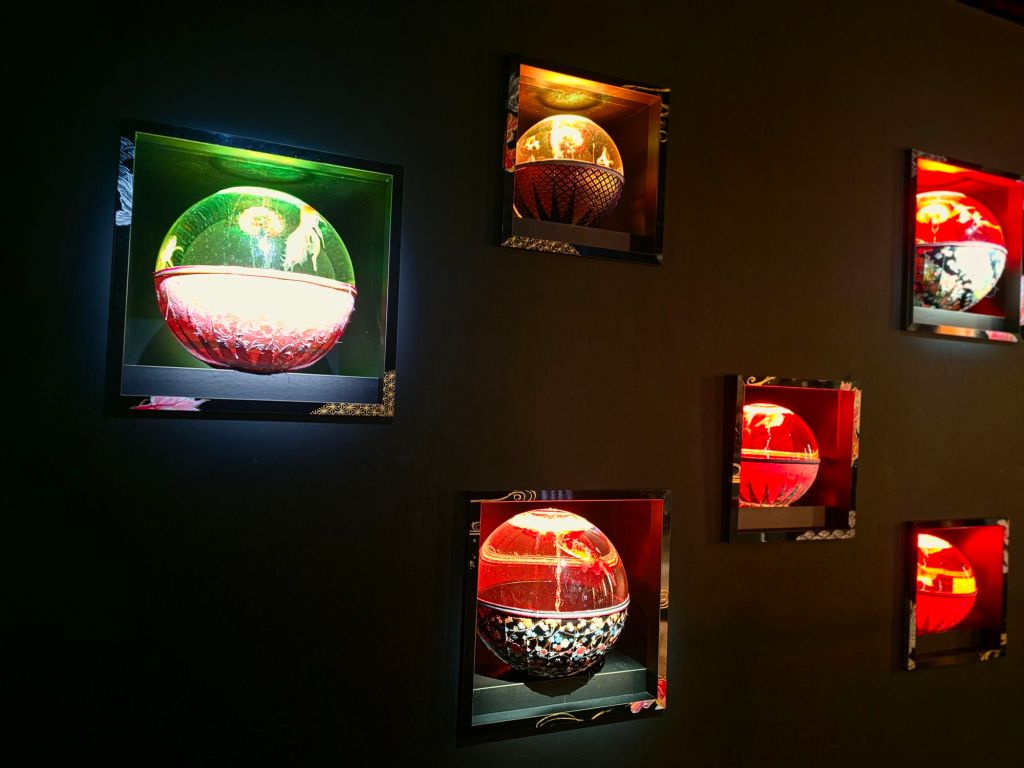
The Temaririum is the first installation I saw, where fish swim gracefully around patterns inspired by traditional Japanese temari balls . The way the lighting shifted and played off the glass made every moment feel like a living painting. Eighteen temari adorn an entire wall, creating a vibrant and dynamic space. I found myself completely absorbed by the tranquility and magnificence of hundreds of goldfish swimming in their own “world” .
The Goldfish Stone Garden
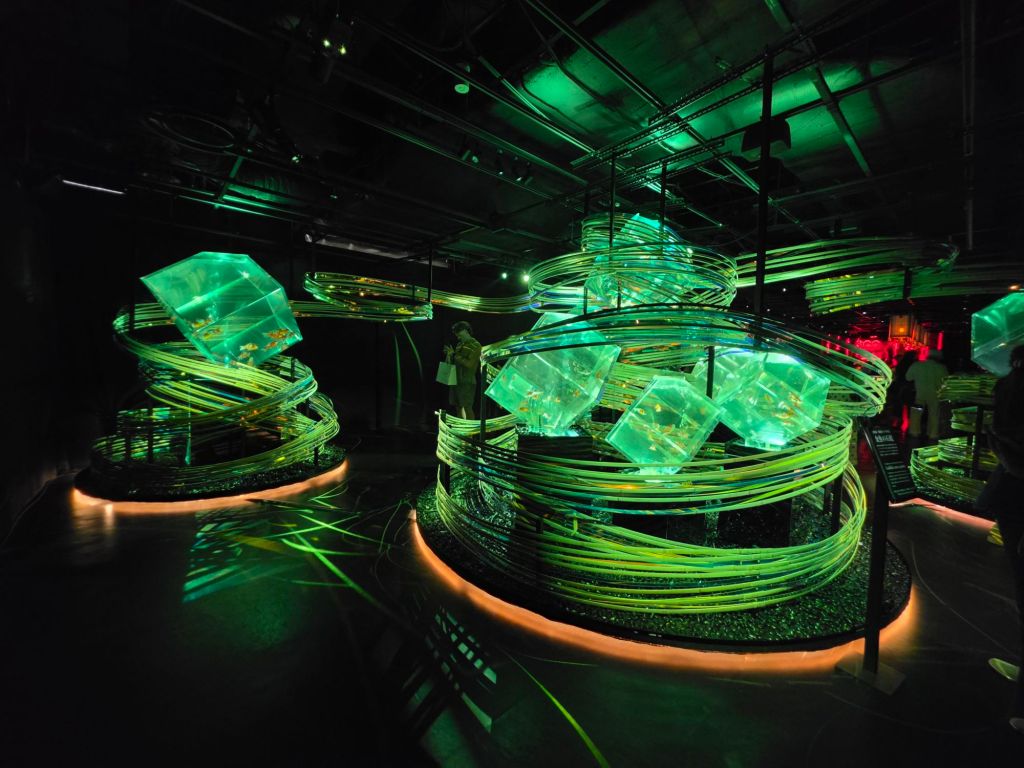
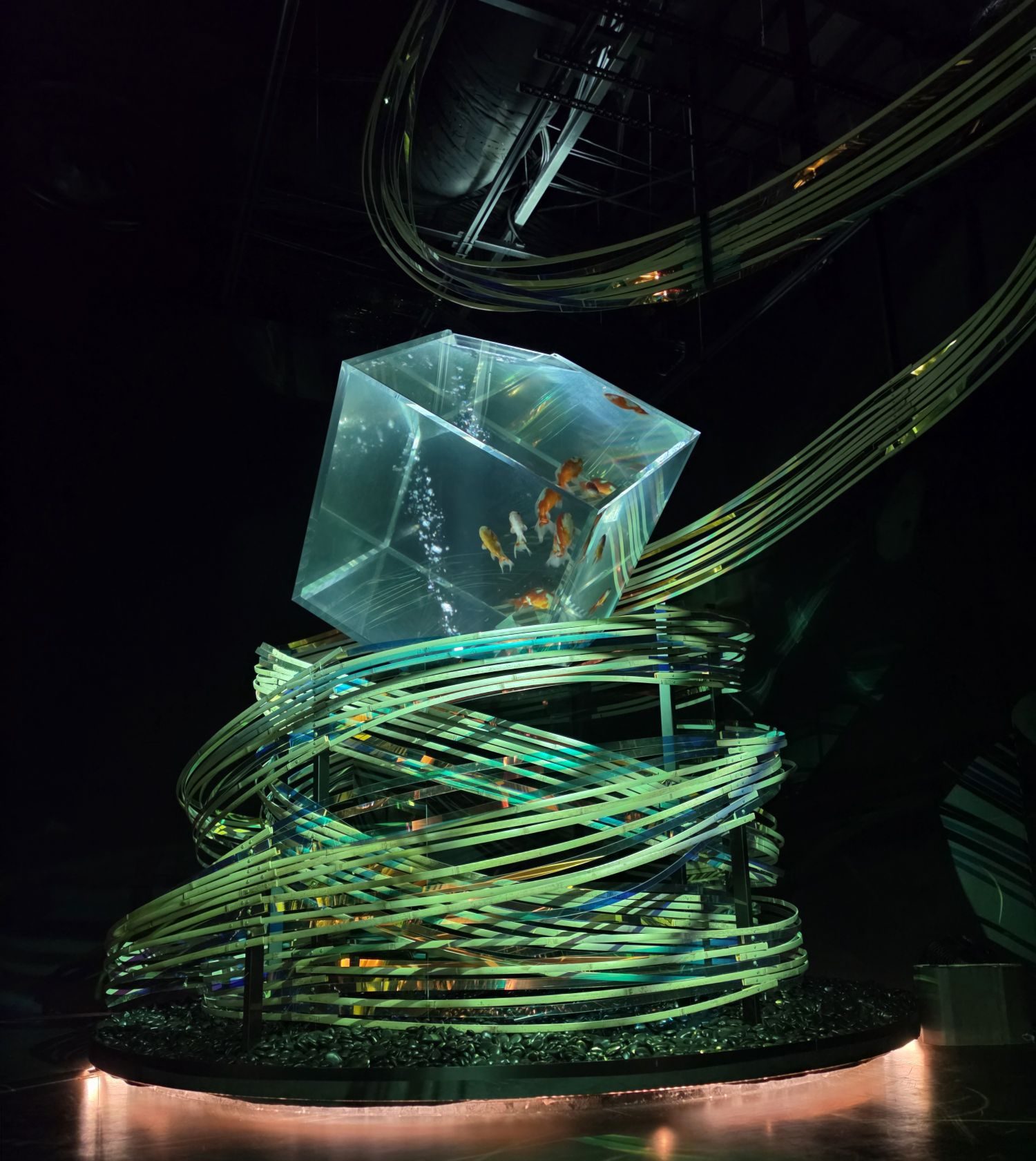
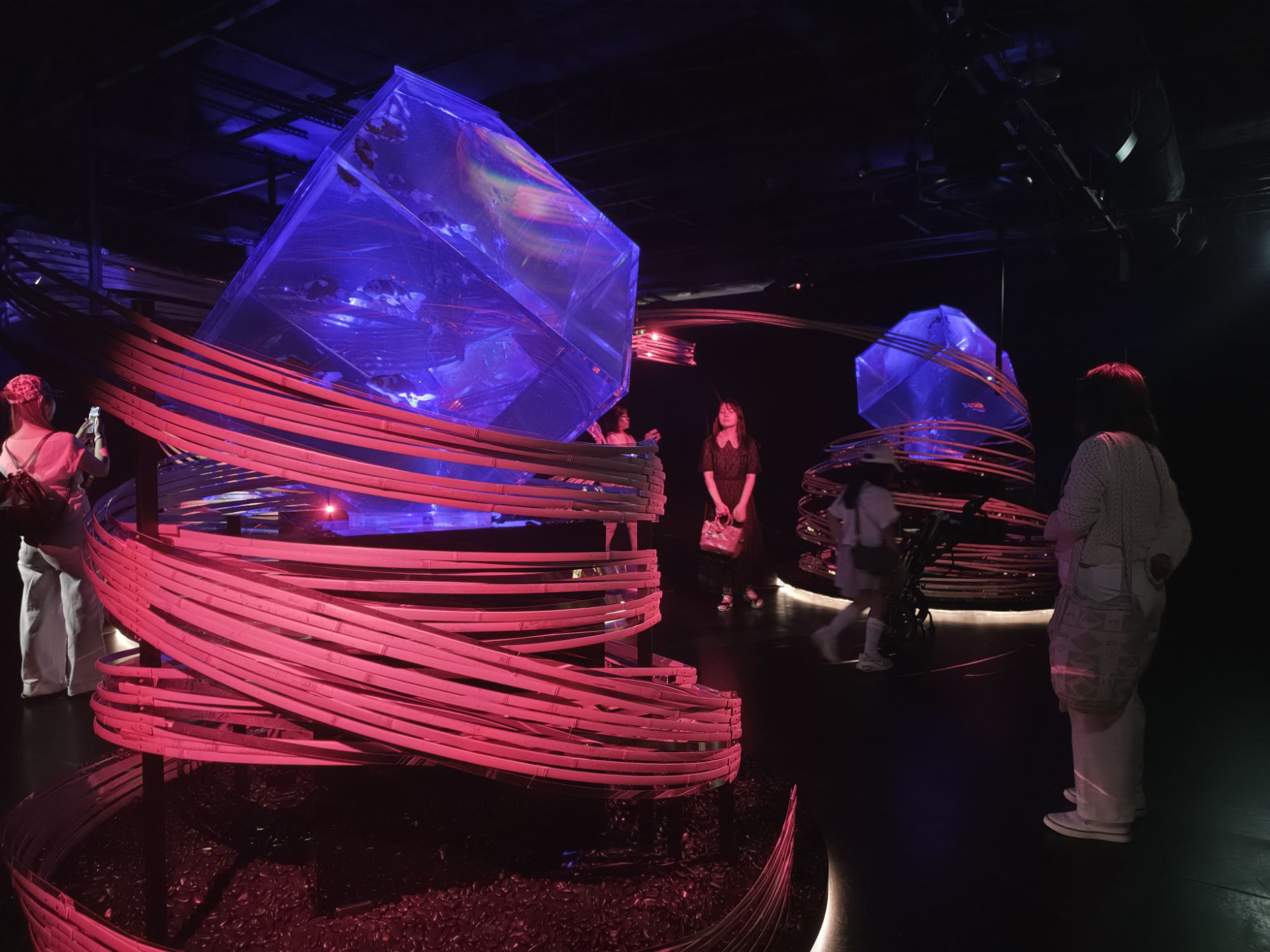
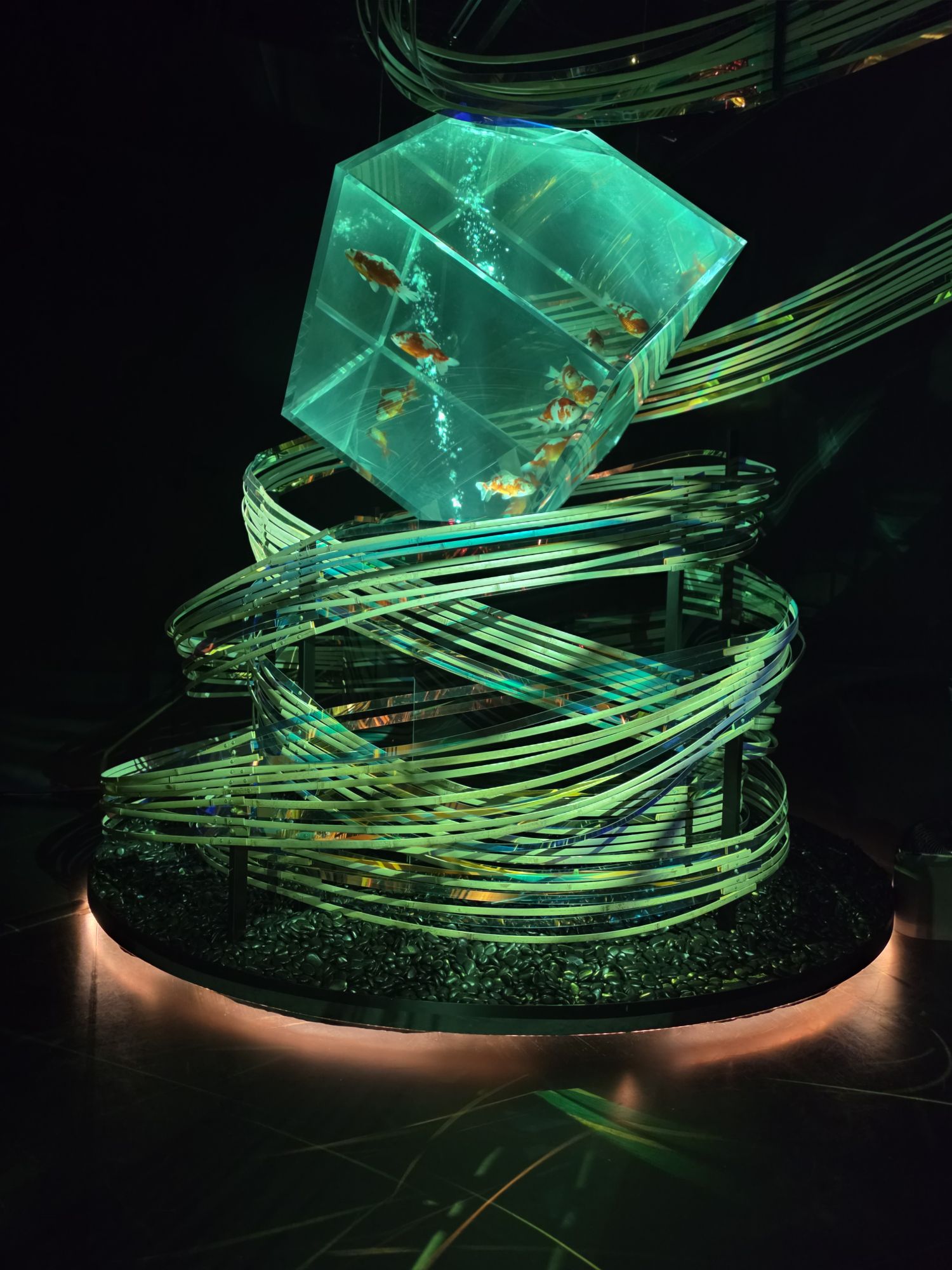
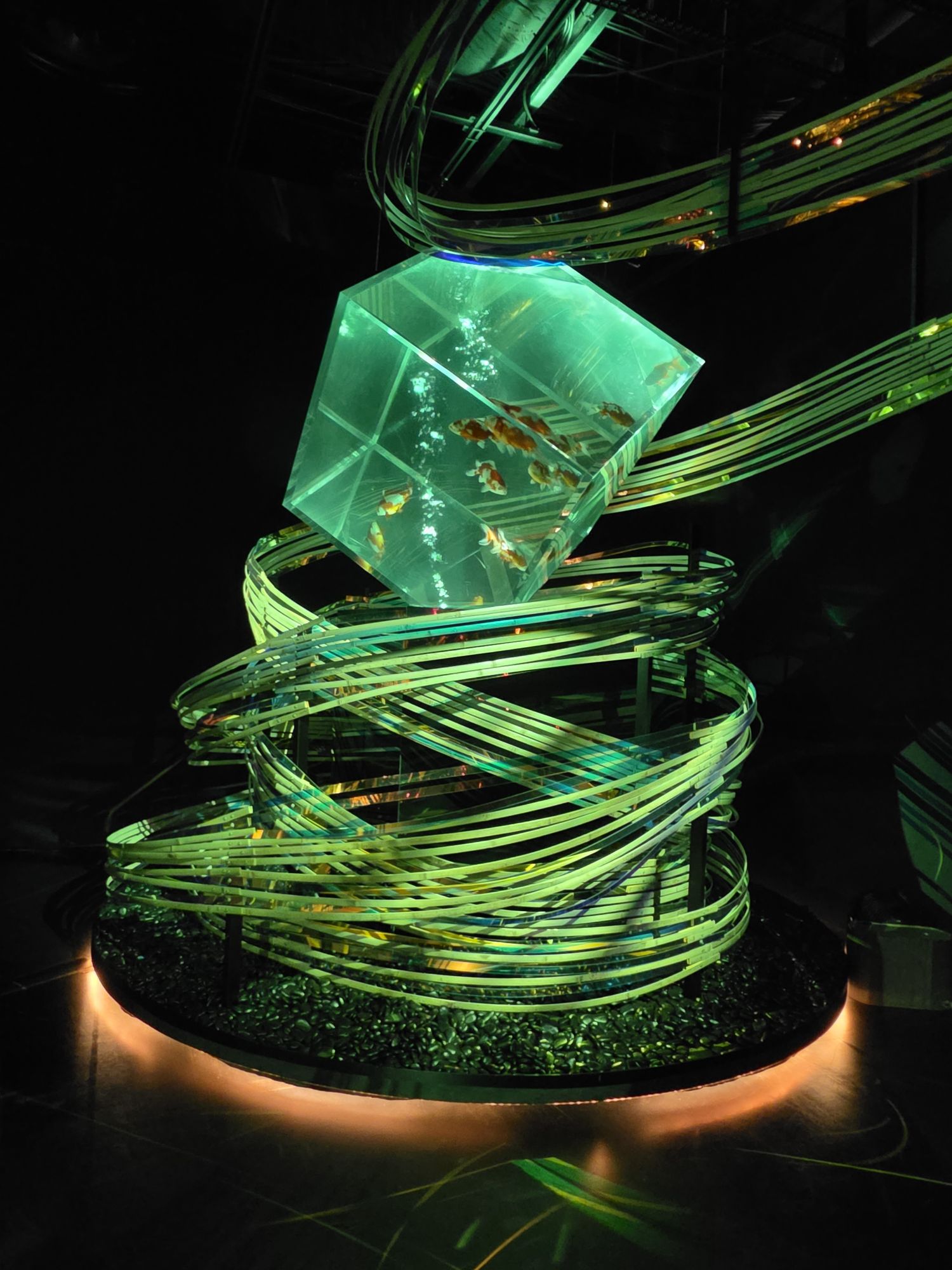
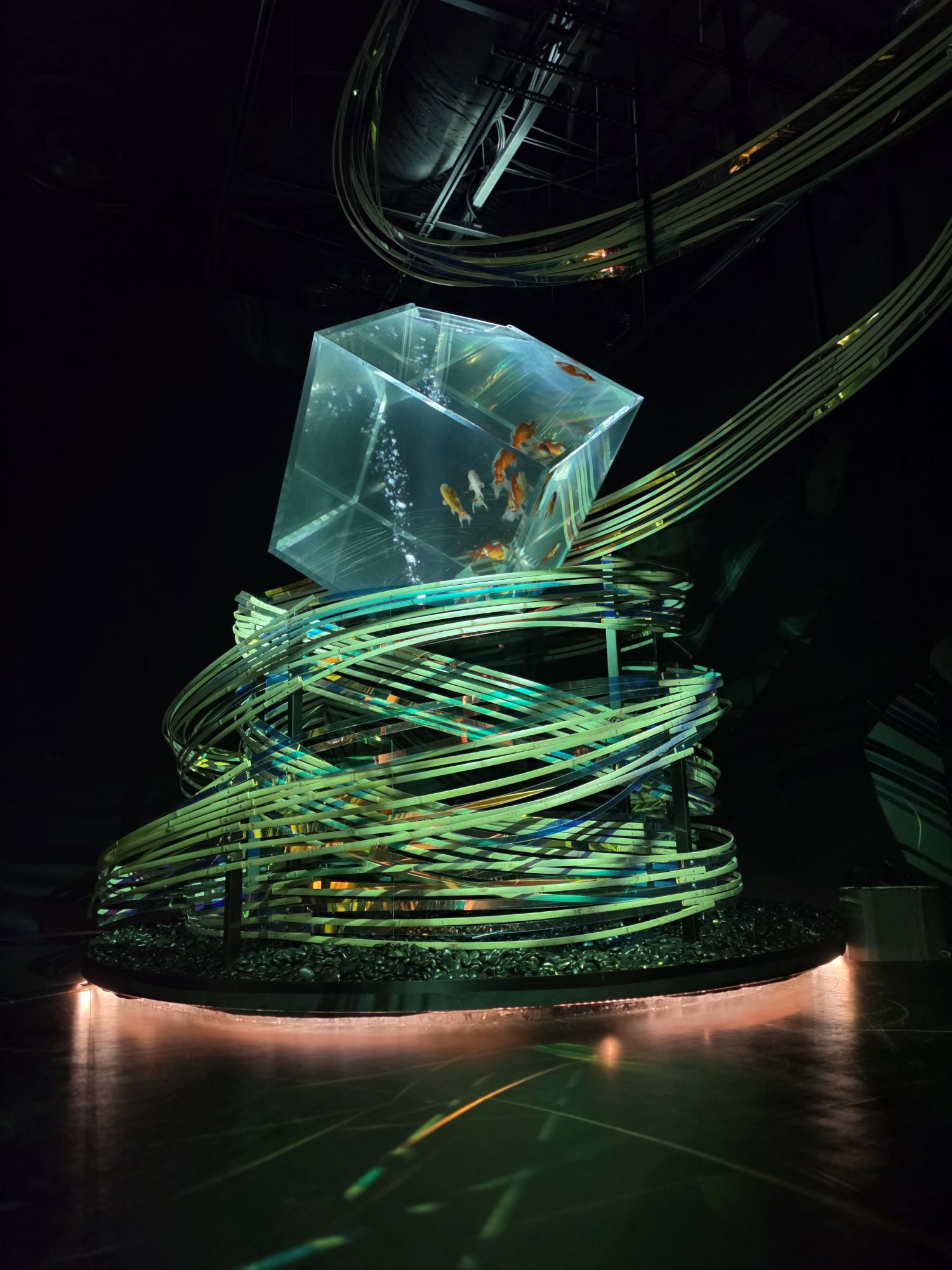
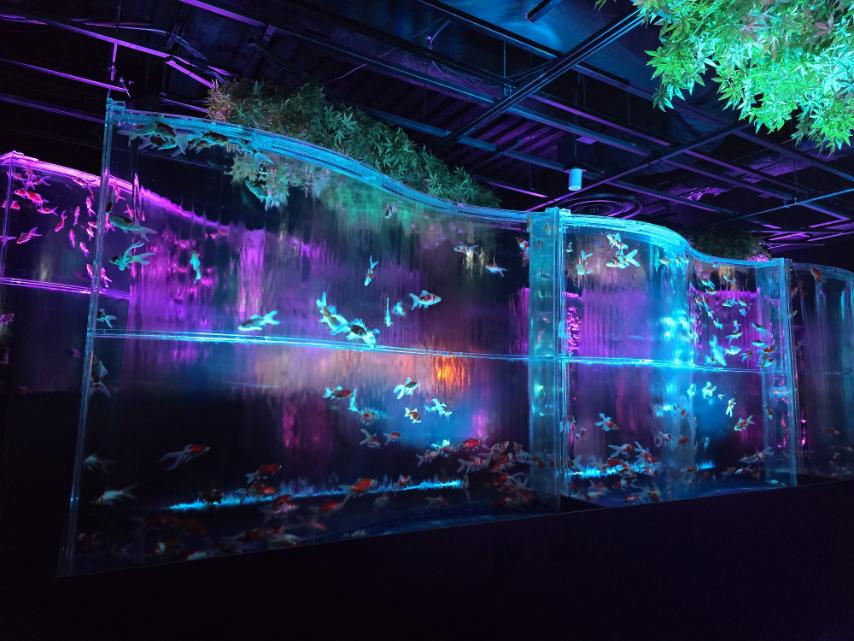
Walking past the Temaririum, a large Bamboo installation that flows like waves greeter me. This artwork is called GoldFish Stone Garden, which depicts a “stone garden,” a Japanese garden stripped down to rocks and stones, with water, flowers, and trees removed as much as possible, and represents it with a mass of water in which goldfish swim. The transparent “stone” where the Golgfish swim changes its color with light. I spent several minutes in this area and sat on a bench while looking at the fish swimming peacefully.
A Show of Kingyo
Goldfish swim gracefully and leisurely in a low, rectangular aquarium. This artwork is meant to be viewed from above, with the goldfish peeking their heads out to the water’s surface. Kimono sashes are used to decorate the sides. An eternal world unfolds, allowing you to feel the boundless potential of goldfish.
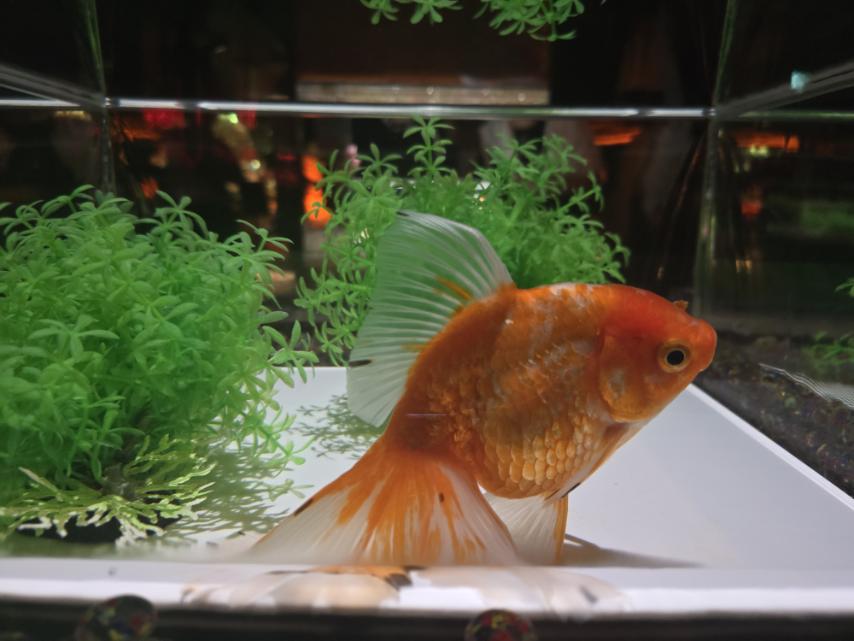
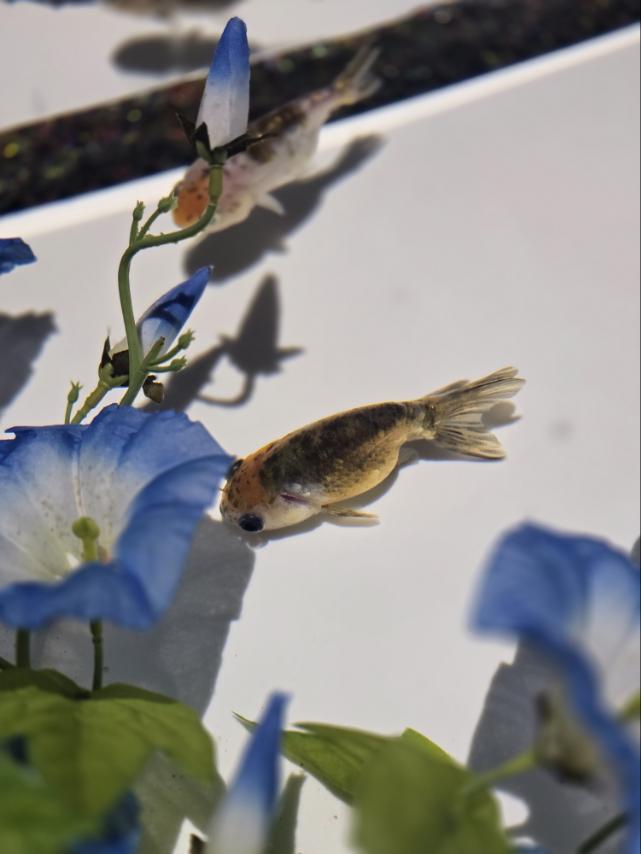
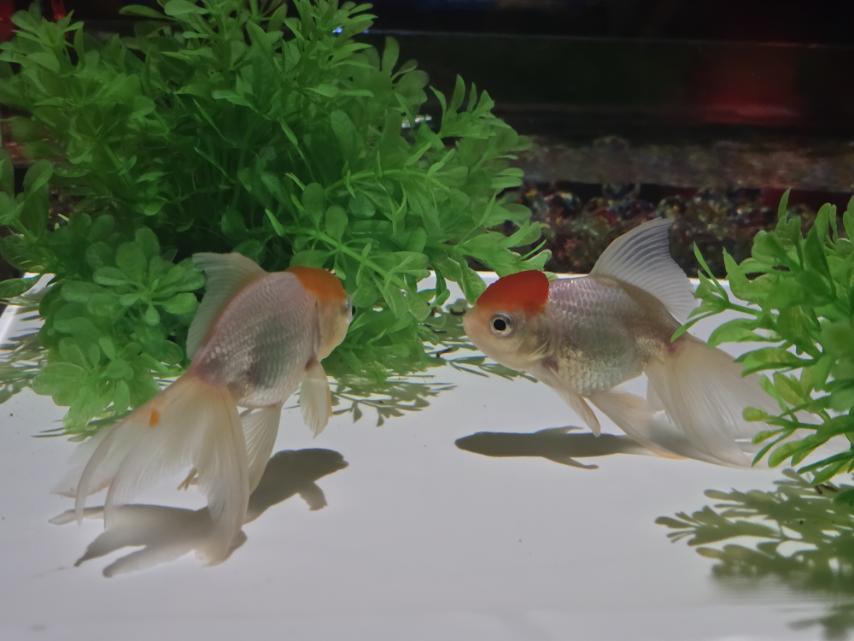
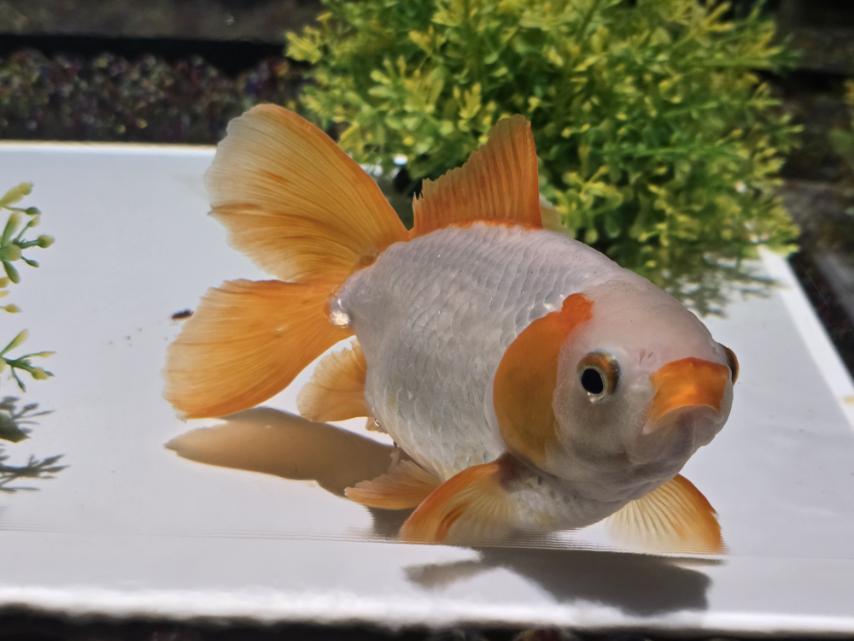
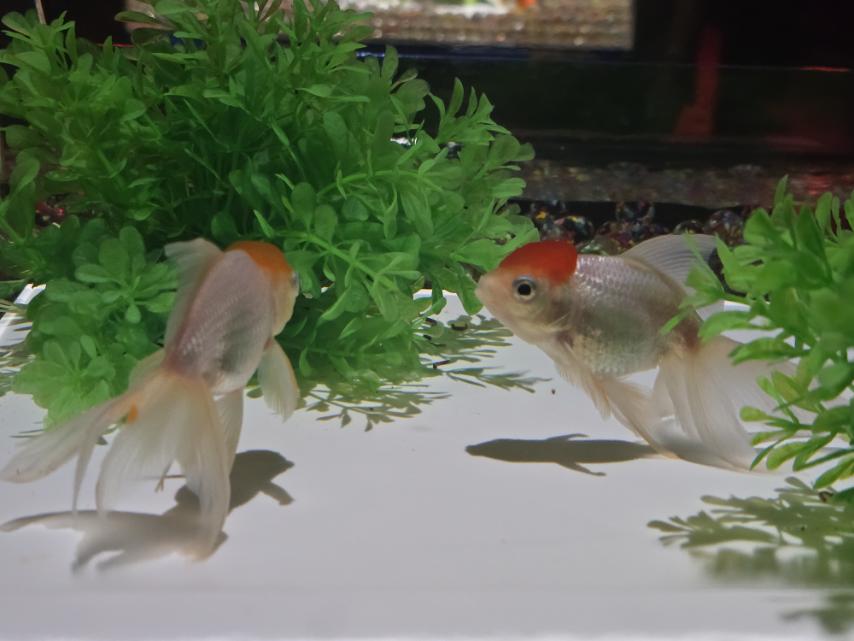
The museum is relatively compact, so it won’t consume your entire day, but the creative presentation and stunning visuals make every moment worthwhile
The Neo Oiran
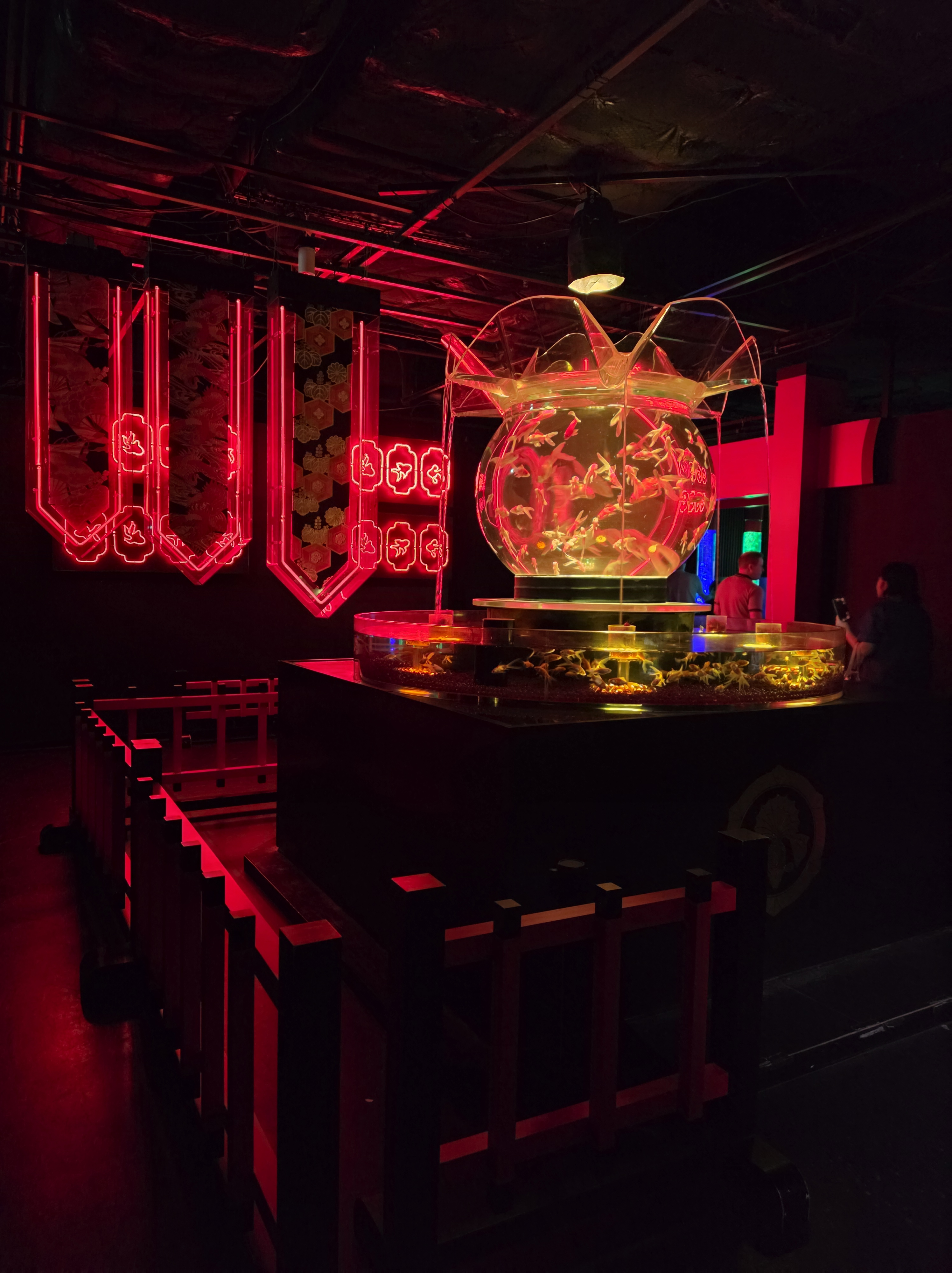
The large-scale aquarium artwork “Oiran,” a signature piece of Art Aquarium, will be lavishly enhanced with neon art that expresses beautiful colors with vibrant light.
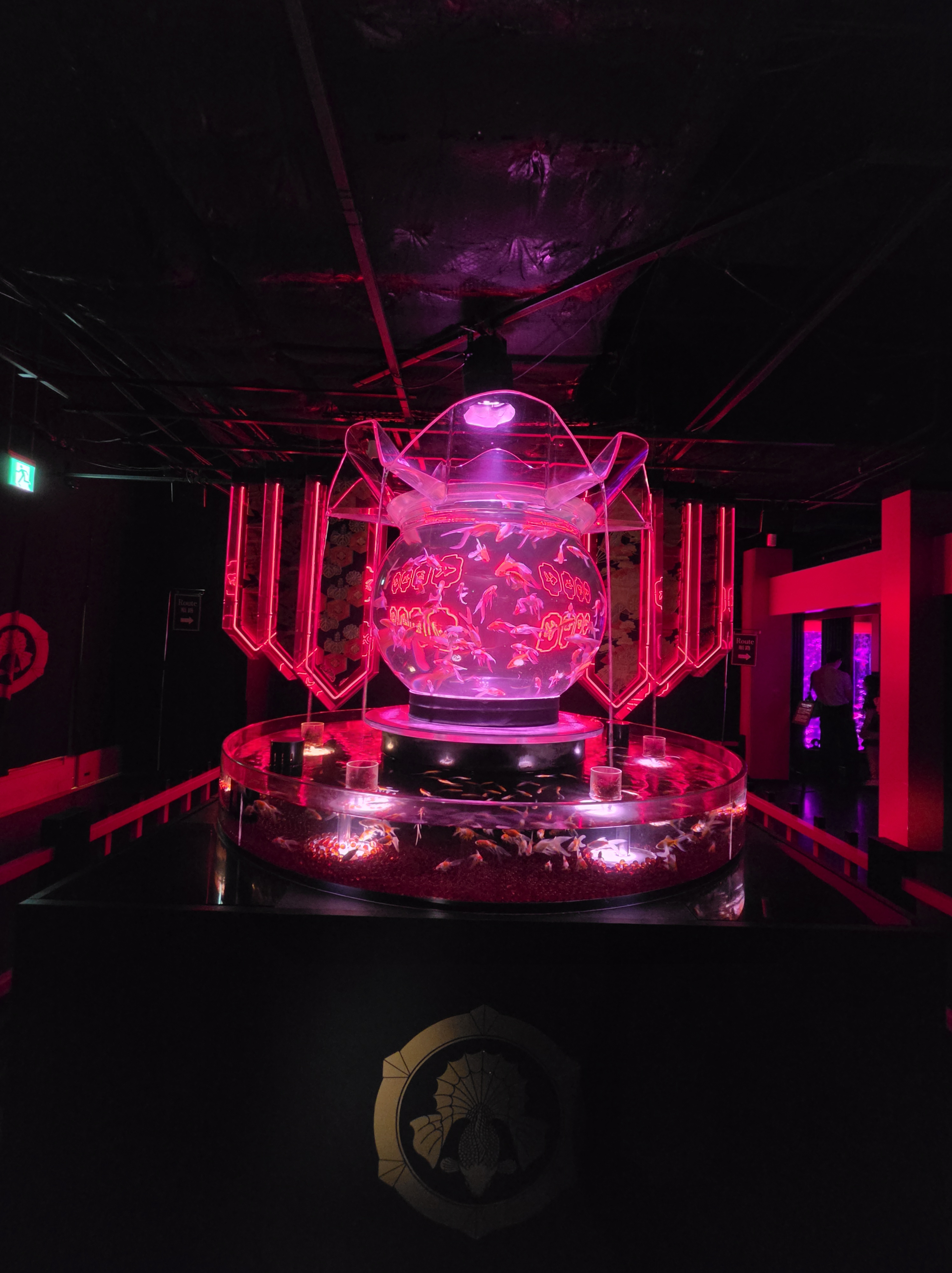
Incorporating new elements of contemporary art into the luminescence, this is a light art piece unlike anything seen before.
The Goldfish Path
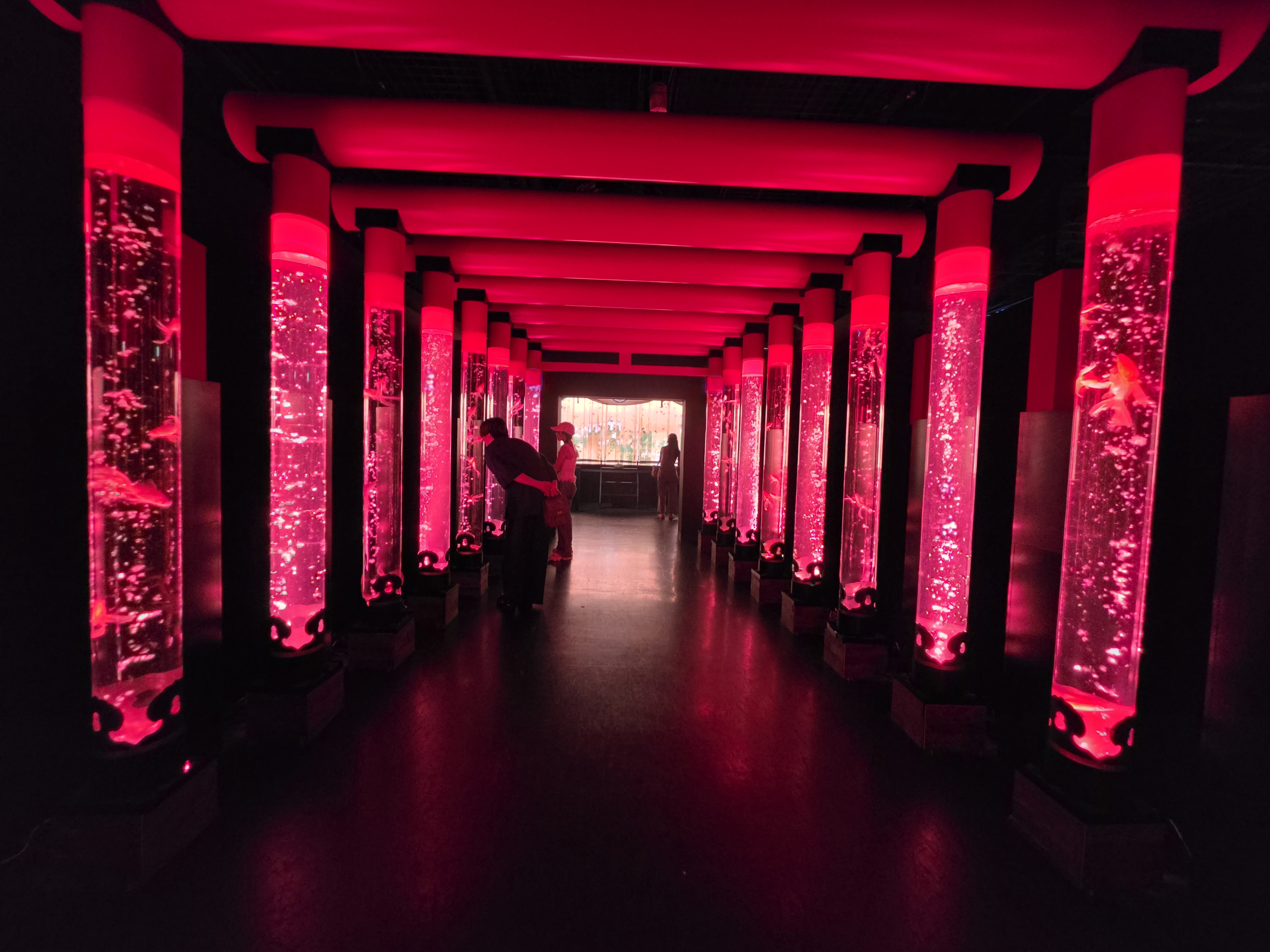
This area features aquariums filled with goldfish, representing a shrine approach, creating a mystical atmosphere. It presents an installation where light, sound, and scent merge.
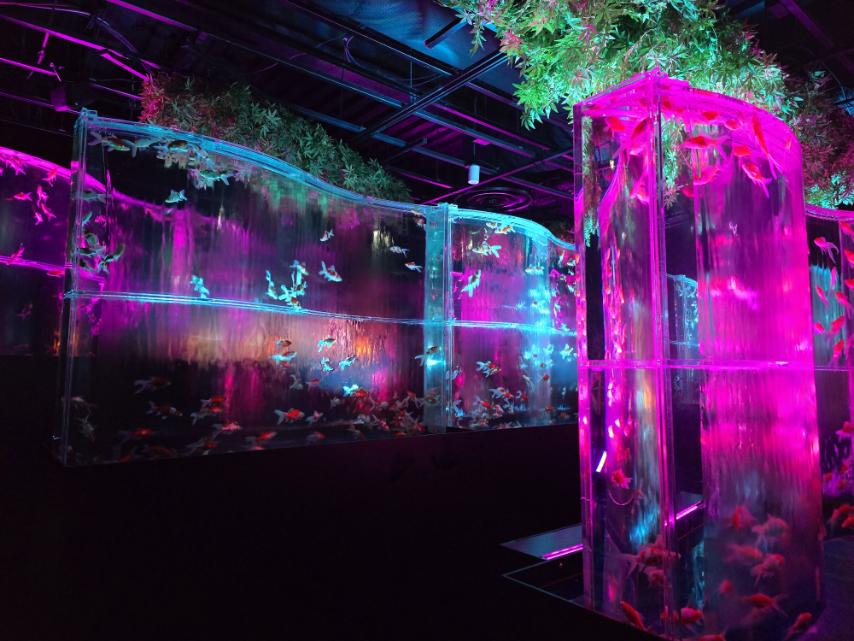
The rows of aquariums, each shaped like a torii gate, resemble an entrance to another world, inviting you into a fantastical realm.
The Goldfish Waterfall
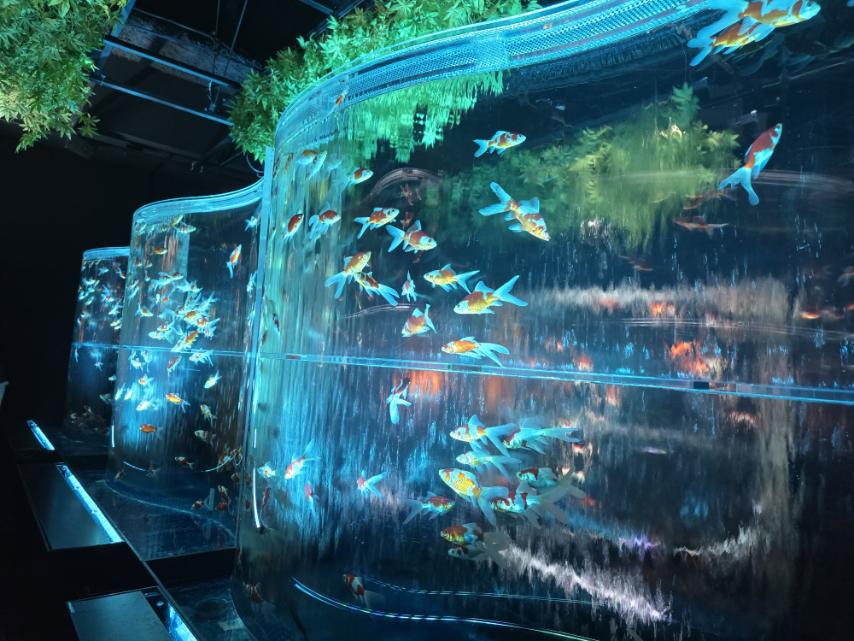
In the soft light, walls of water ripple and undulate in layers. The gently flowing water is truly like a waterfall of goldfish. If you go behind the flowing water, you can see goldfish swimming and dancing right before your eyes.
The Onemerium
The Inome, a heart-shaped pattern, has been used in Japan since ancient times to ward off evil and bring good fortune. It can be seen in various architectural decorations of shrines and temples since ancient times. A window featuring this Inome motif has been transformed into an aquarium, and goldfish swim gracefully amidst the scenery unfolding outside the window.
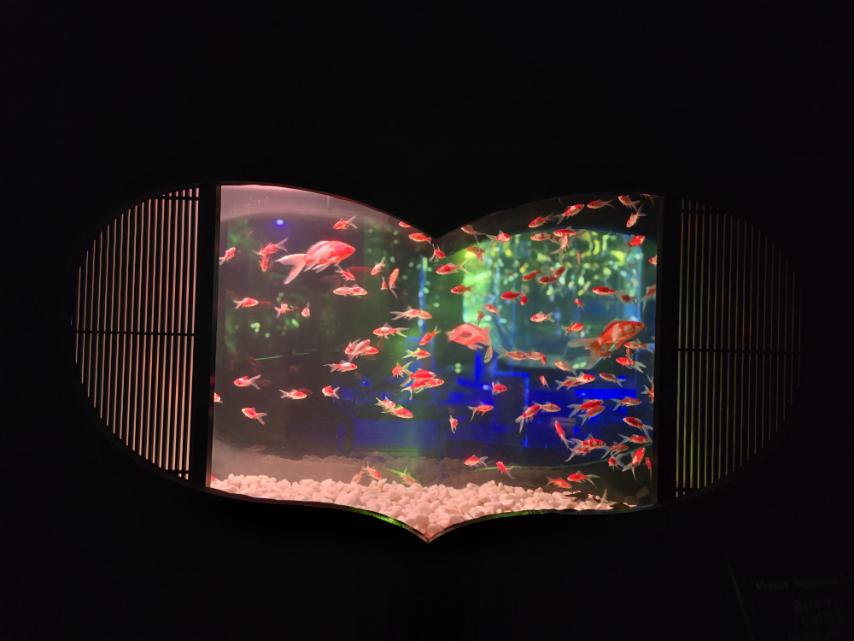
The Goldfish Corridor
Stepping into the rows of goldfish-shaped columns, you are greeted by an infinite expanse of space. Looking down from the platform adorned with traditional Japanese patterns, you can also see the spatial expansion extending downwards. This is a spatial artwork that evokes the corridors found in temple and shrine architecture.
The Goldfish Collection
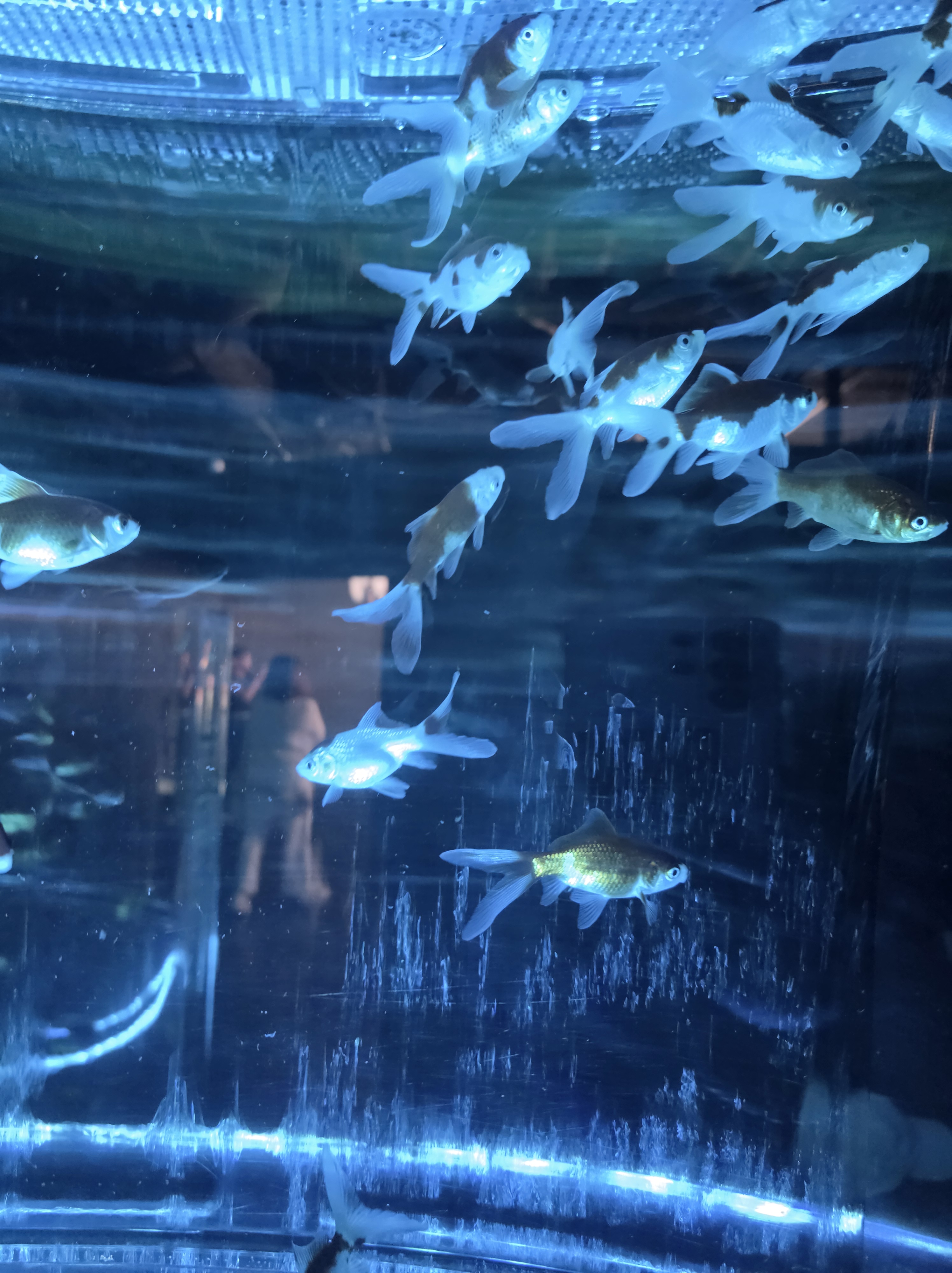
We display goldfish like an art gallery, focusing on rare varieties that you don’t often see. We use lighting effects to allow you to view the goldfish from various angles.
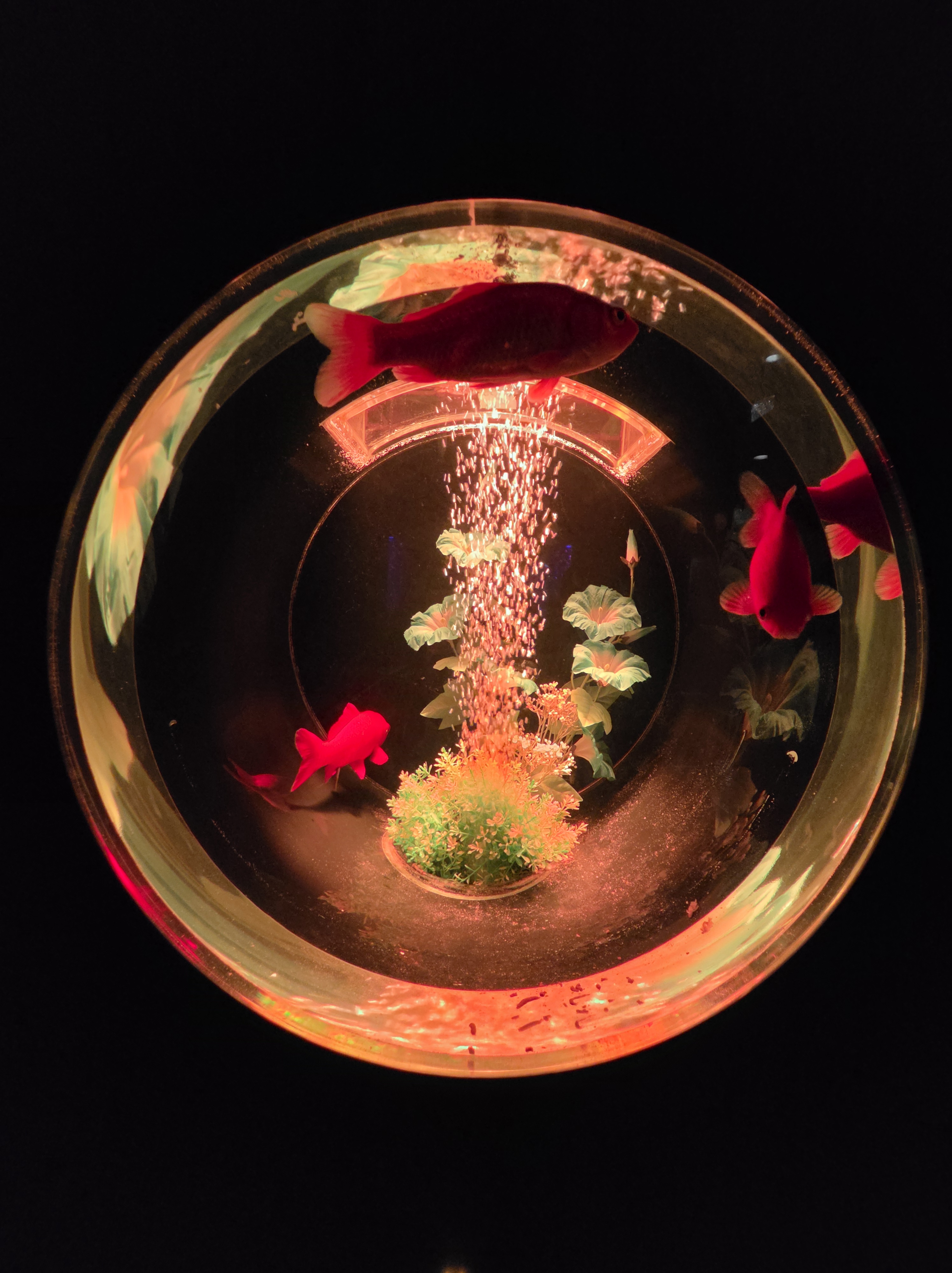
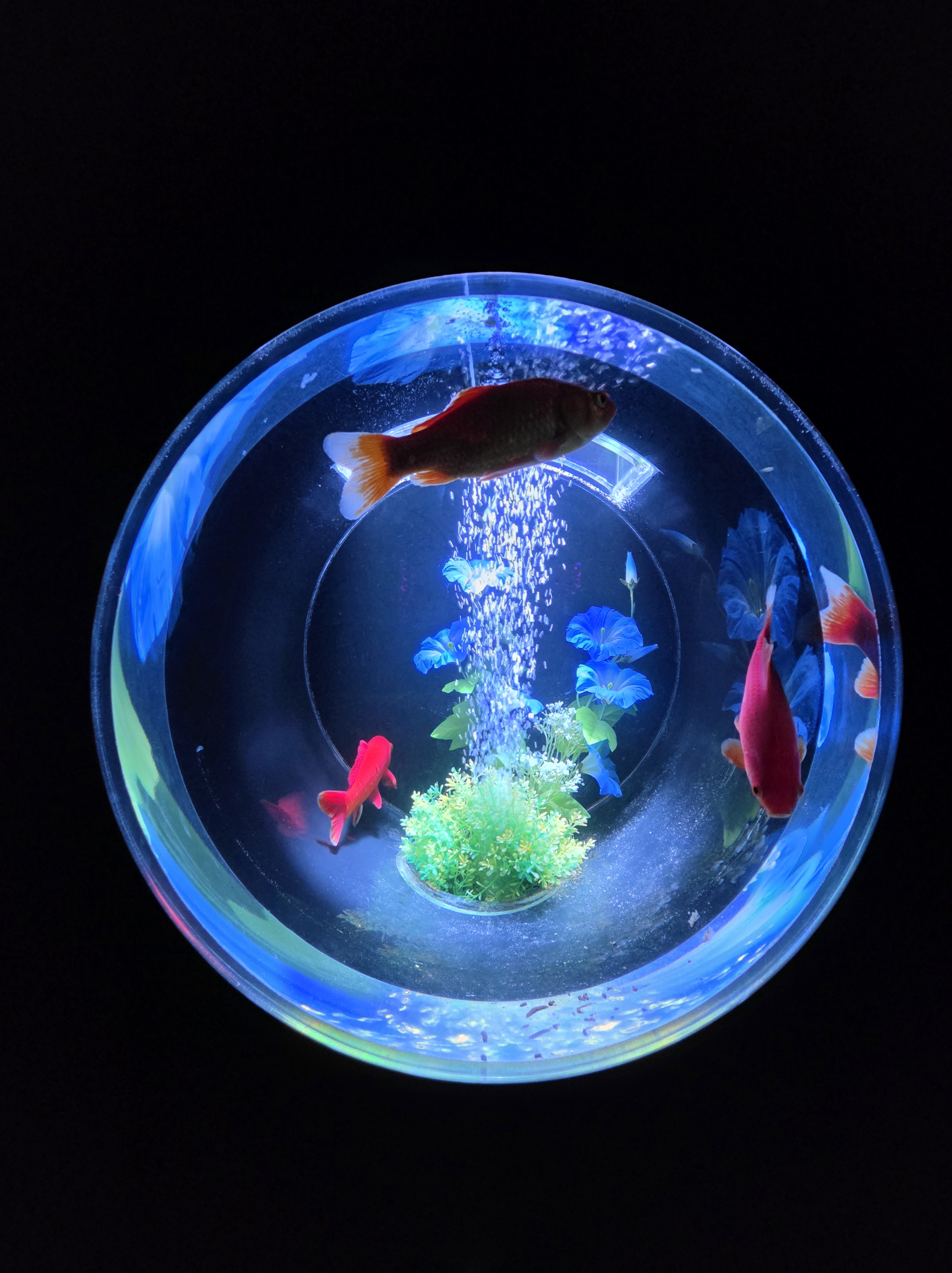
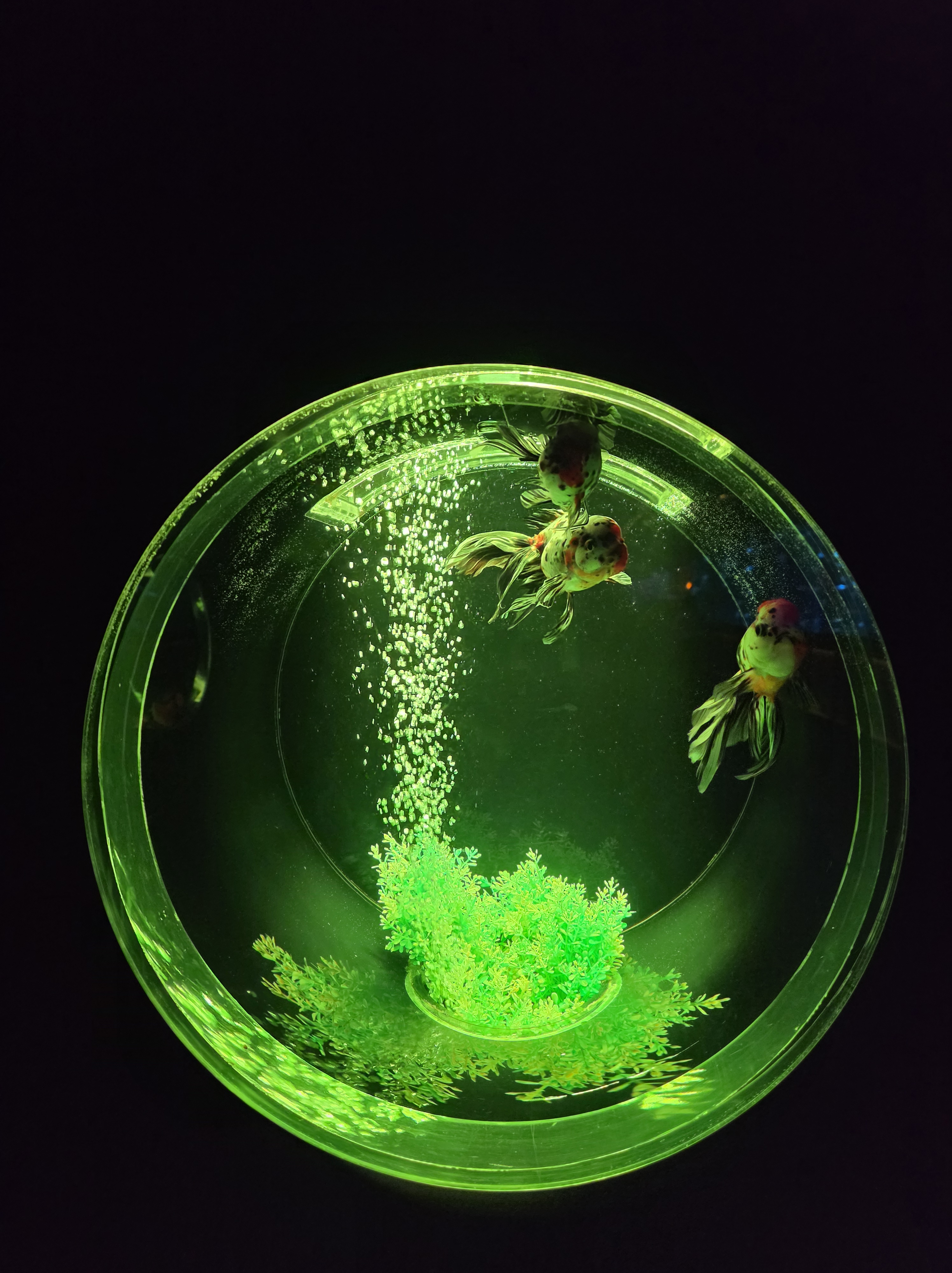
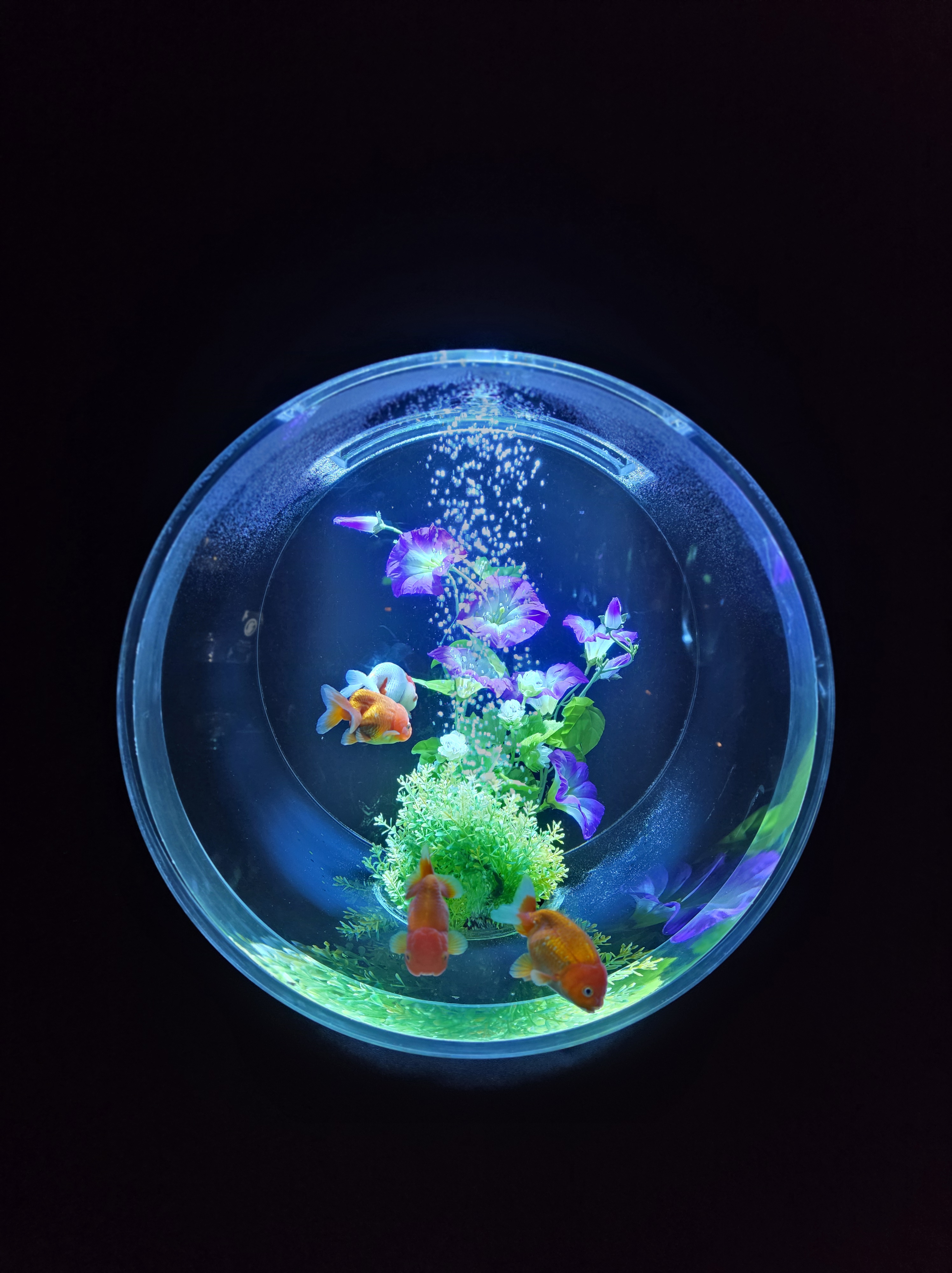
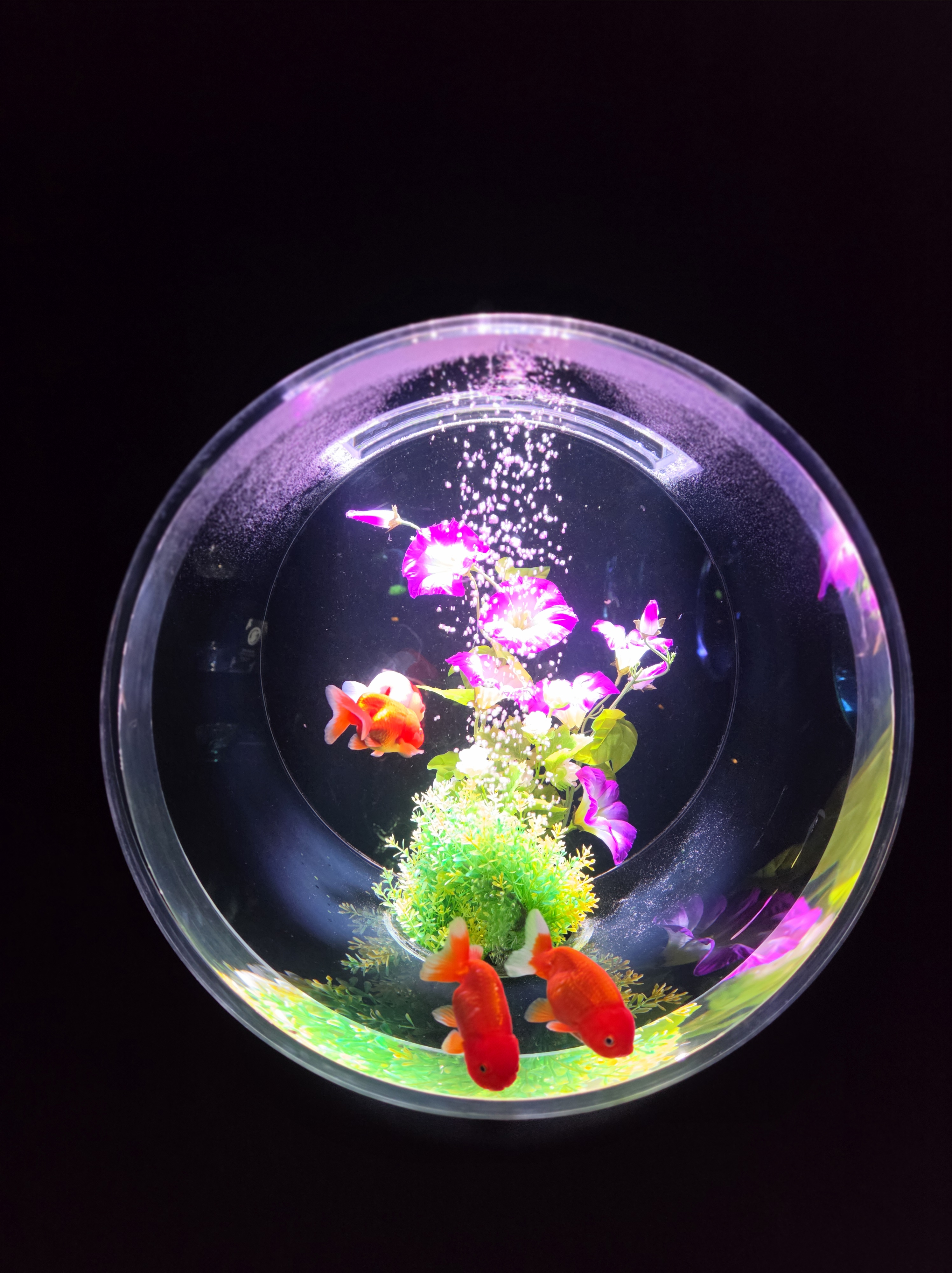
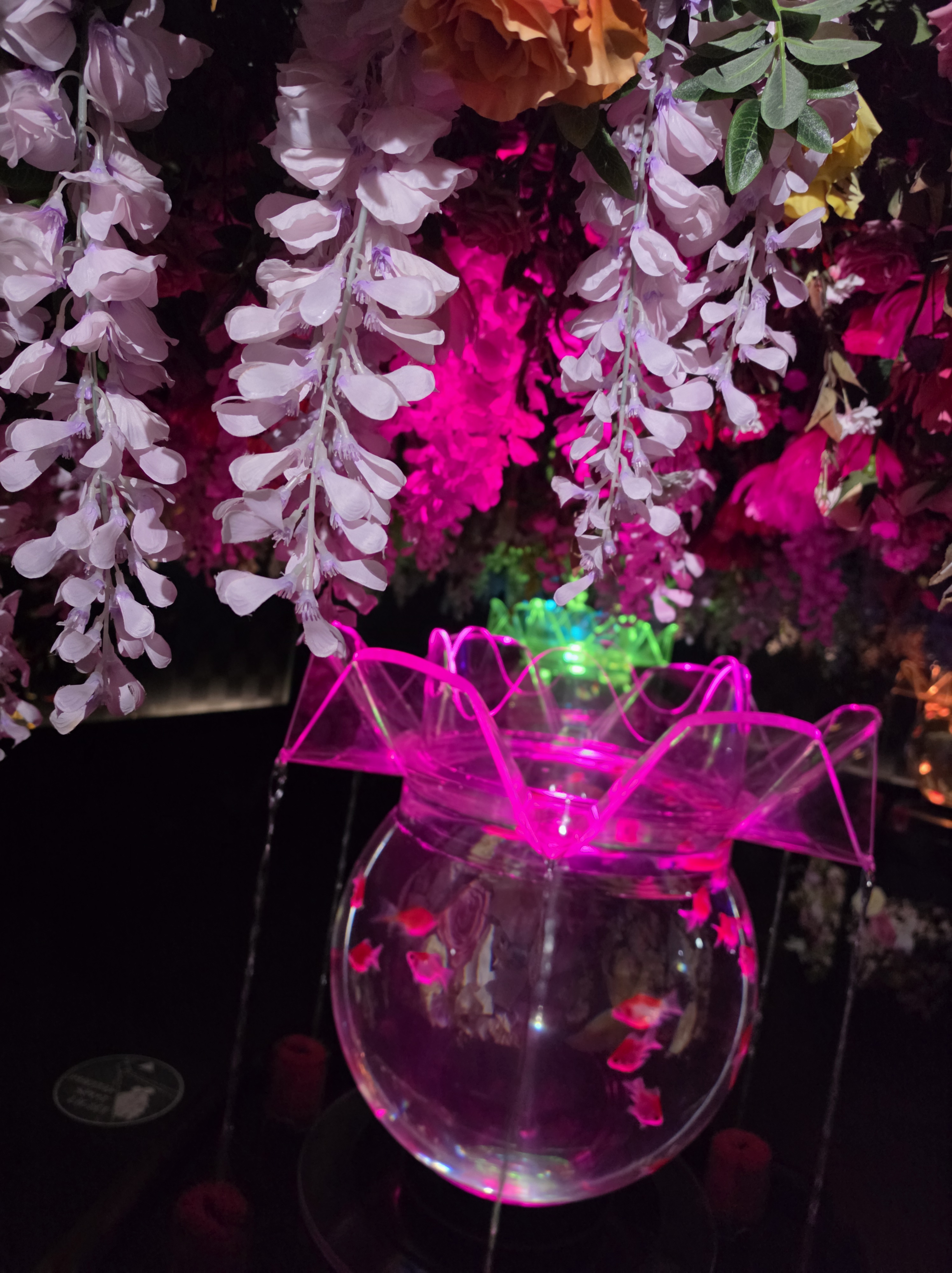
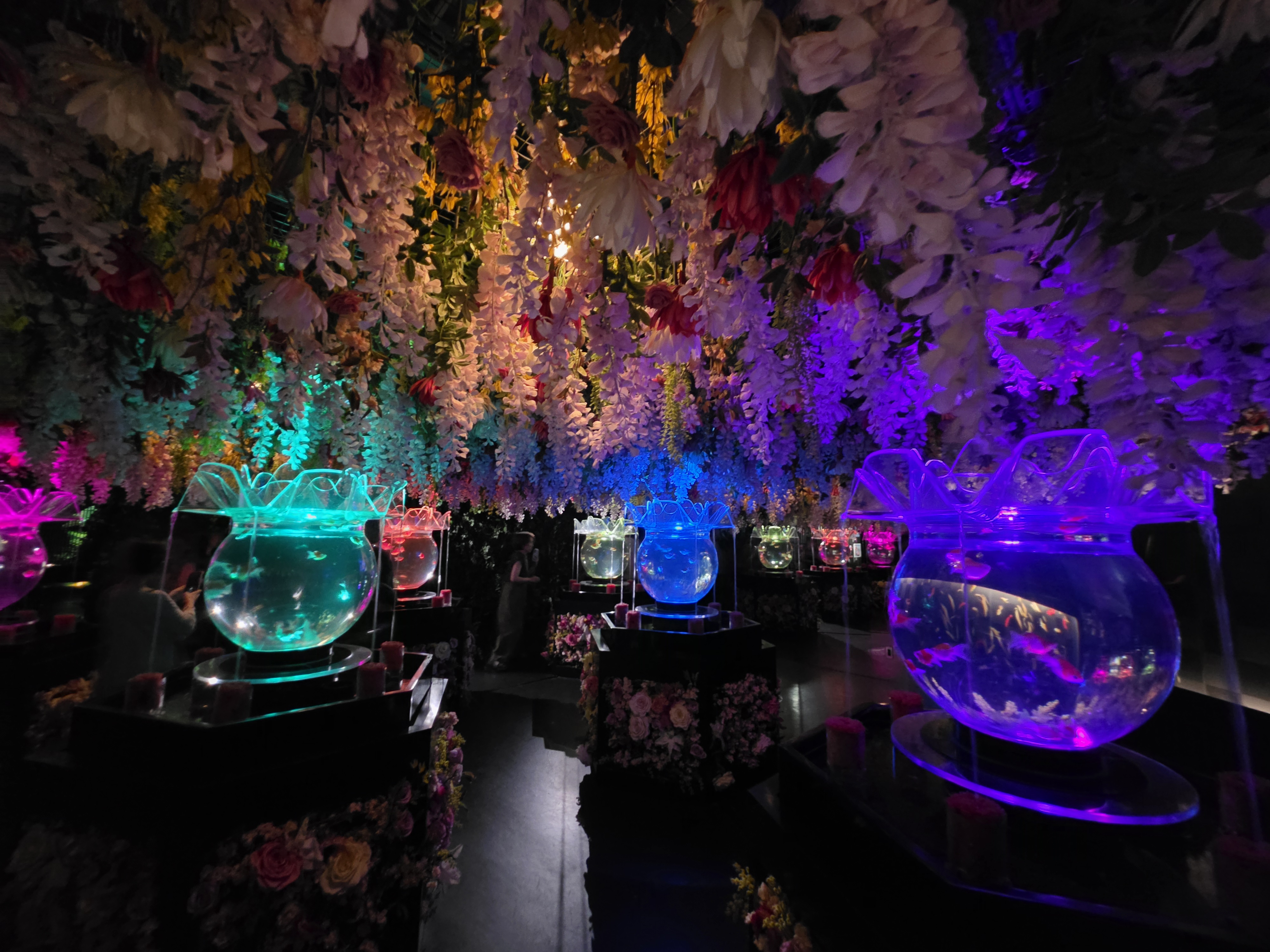
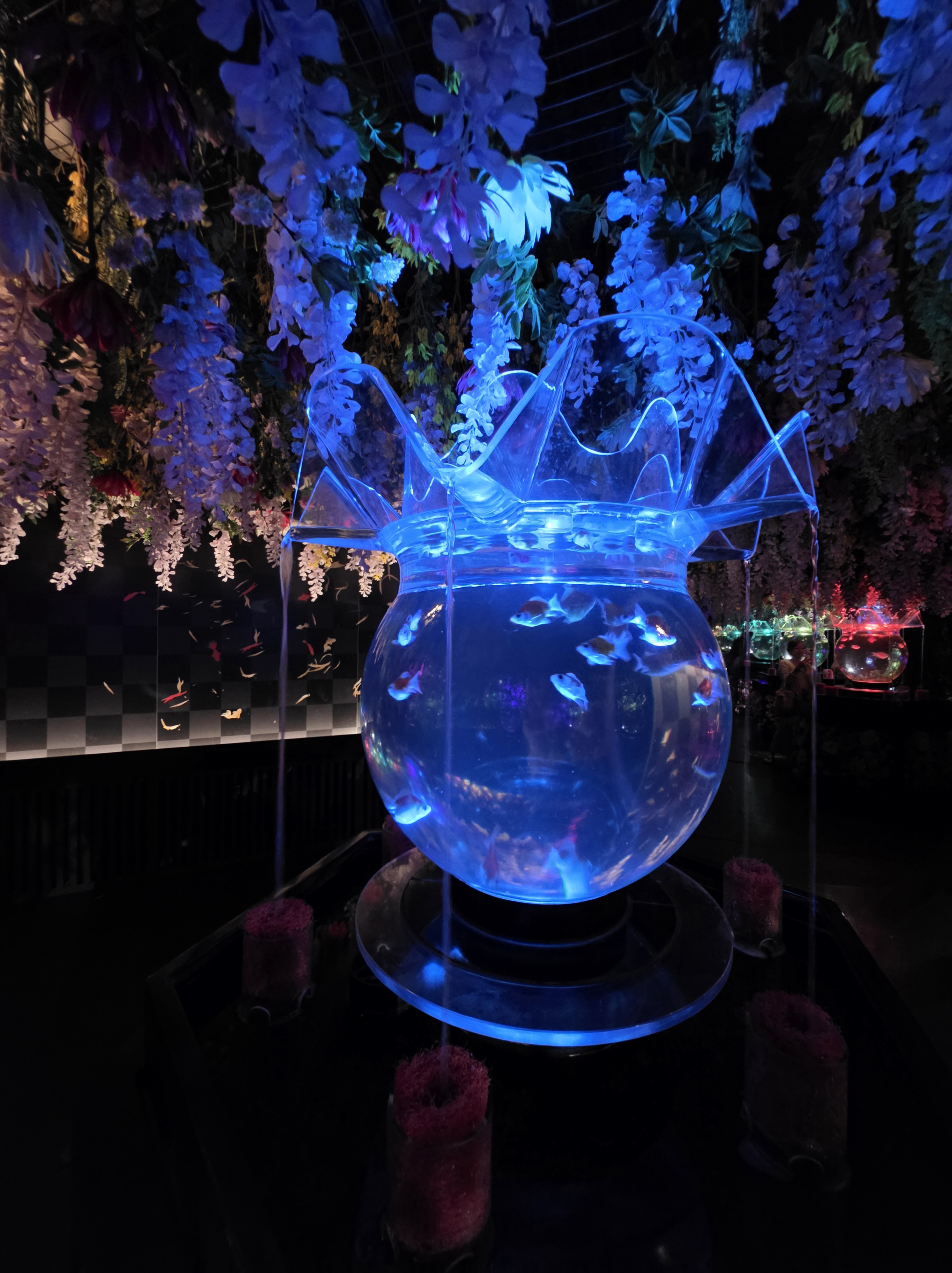
The Ooiran Hanamai
This dazzling spatial artwork features aquarium sculptures of courtesans (“Oiran”) surrounded by a variety of flowers. A graceful and vibrant space unfolds, where goldfish and flowers come together. Enjoy this immersive space surrounded by flowers.
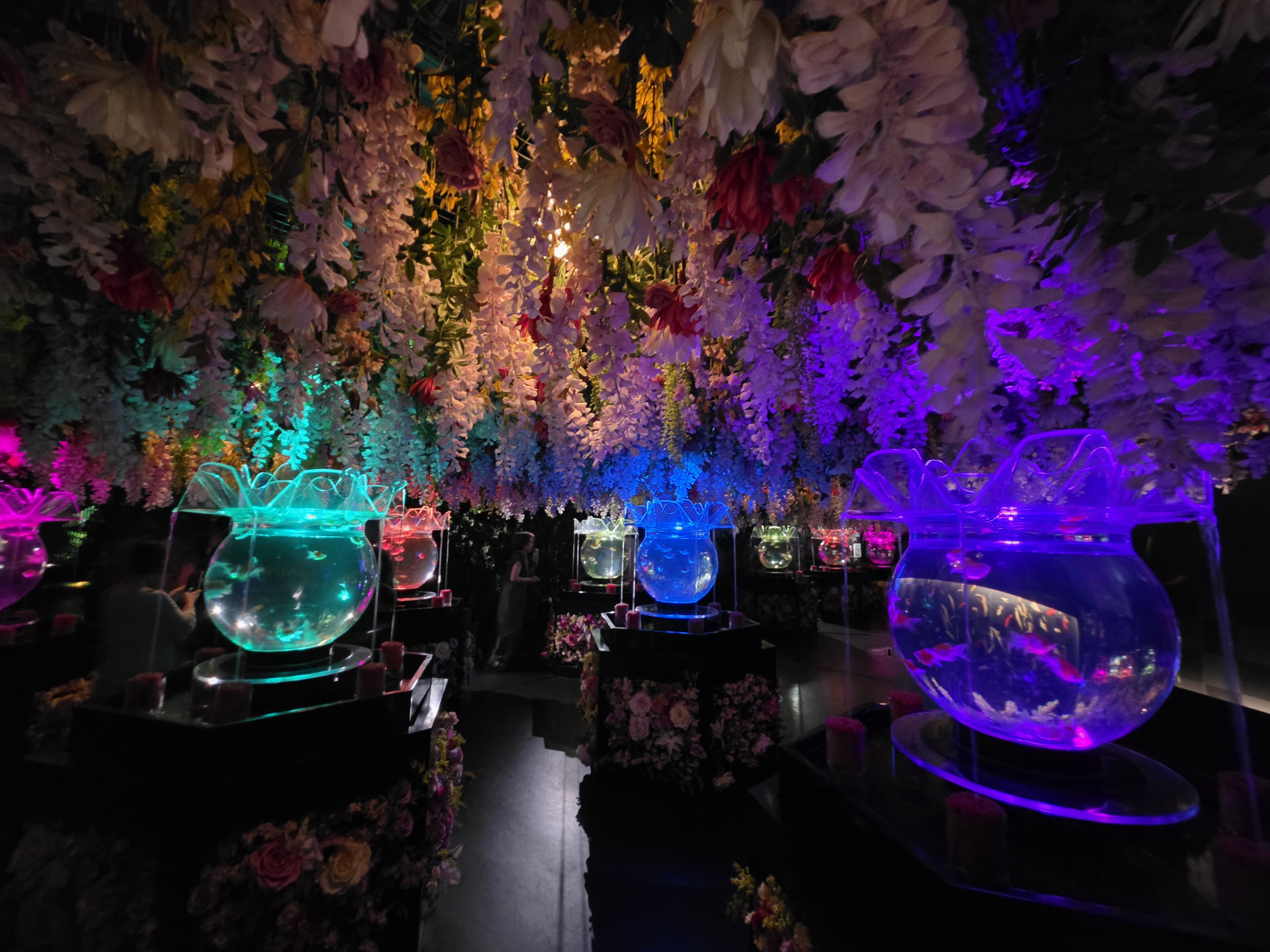
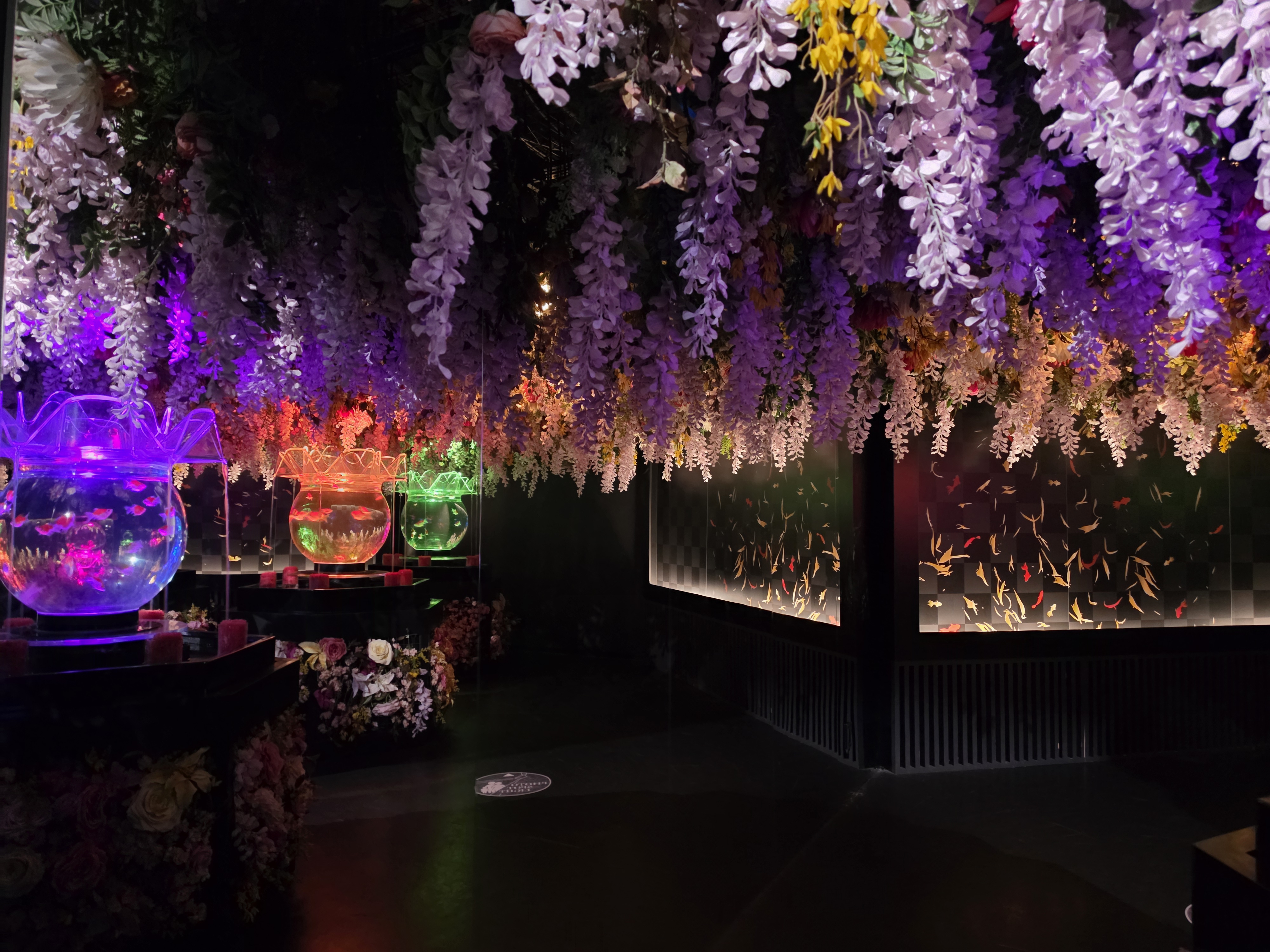
Utagawa Kuniyoshi Collection
We have collected and are exhibiting works by Utagawa Kuniyoshi, a ukiyo-e artist from the late Edo period, that depict goldfish and carp.
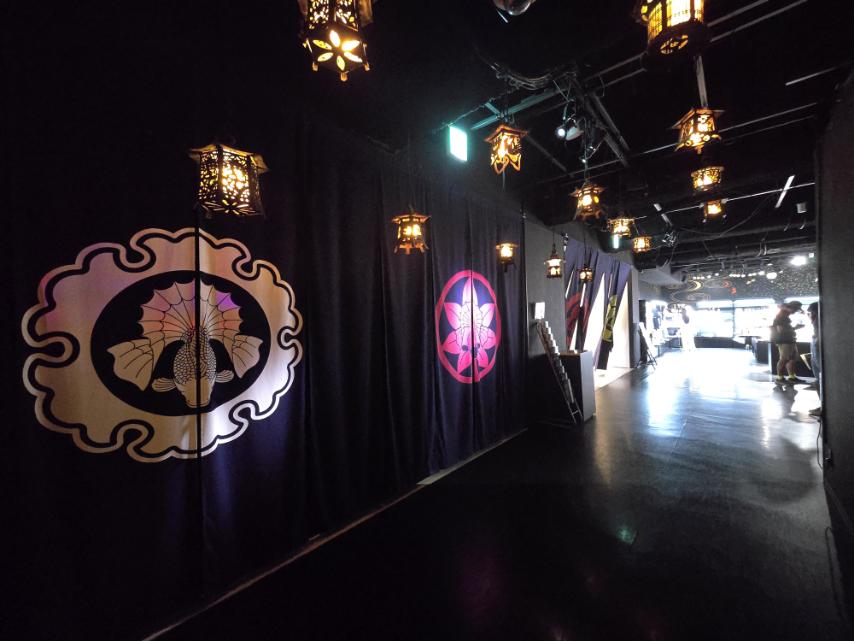
The Collaboration Art
Currently, top creators who are gaining popularity worldwide and are active in various fields are exhibiting new works inspired by the Art Aquarium. The works will be changed regularly. Please enjoy the collaborations brought to life by these creators.
Location and Opening Hours
The museum is incredibly easy to get to. It’s just a short walk from Ginza Station on the Tokyo Metro, with the A7 exit being the most direct route . You can also access it from Higashi-Ginza Station via an underground passage .
- Address: 4-6-16 Ginza, Chuo-ku, Tokyo (New Building, 9th Floor) click this link to google maps and review the location prior to visit https://maps.app.goo.gl/UuxqxRjDapfkEiA98
- Hours: 10:00 AM to 7:00 PM (last admission at 6:00 PM) .
- Tickets: It’s cheaper to buy tickets online. An online adult ticket is 2,500 yen, whereas a same-day ticket from the vending machine costs 2,700 yen . Up to two elementary school-aged children can enter for free with one paying adult .
- Time: The estimated viewing time is about 1 hour, but I recommend taking your time to appreciate the details .
The Photographer’s Paradise (With Rules)
For photography lovers like myself, it’s a dream. Photography is permitted, and you’ll see a lot of visitors trying to capture the magic . However, there are strict rules to protect the fish and the experience for others:
- No Flash: Using a flash is strictly forbidden as it can scare the fish . It also ruins photos by creating a glare on the glass .
- No Tripods: The use of tripods, monopods, and other stabilization equipment is also prohibited .
The key is to use the ambient light and be patient. The dim conditions are tricky, but the challenge is part of the fun.
A Question of Ethics: Beauty vs. Confinement
It is impossible to walk through the museum without a touch of mixed emotion. The beauty is undeniable, and the artistic vision is breathtaking. However, seeing the fish—living creatures—confined in what are, essentially, ornate bowls and small tanks, does give one pause. You see the graceful, colorful goldfish, and then you think about the space they have to live in . The museum is a celebration of their beauty, but it’s also a reminder of their captivity. It’s a complex feeling: admiration for the artistry and the creatures, intertwined with a pang of sympathy for their confined existence. It’s a thought that adds an unexpected layer of depth to the experience.
What to Do After Your Visit
Once you’ve finished exploring the aquatic art, you’re in the heart of Ginza, so the day is far from over.
The Art Aquarium Museum itself is inside the Ginza Mitsukoshi department store. Afterward, be sure to explore the Depachika—the basement food floor . It’s a paradise of artisanal bento boxes, beautiful pastries, and exquisite Japanese food items that make perfect gifts or a lovely snack.
From there, the famous Chuo-Dori Street is just outside. On weekends, this main shopping street becomes a pedestrian-only paradise . You can wander past flagship stores like the 12-story Uniqlo, or explore luxury boutiques and the iconic Itoya stationery store .
If you have time, you can walk to the famous Tsukiji Fish Market, which is also nearby. While the inner market has moved, the outer market is still a vibrant hub for fresh sushi and street food . For a more serene end to the day, Hamarikyu Gardens is a beautiful traditional landscape garden within walking distance, offering a peaceful contrast to the buzz of Ginza.
My Thoughts on this attraction
The Art Aquarium Museum in Ginza is a unique and unforgettable experience. It is a beautiful fusion of art and nature that will appeal to anyone who appreciates aesthetic beauty, Japanese culture, and, of course, the grace of goldfish. Just remember to bring your camera (but leave the flash on your phone), book your tickets online, and prepare yourself for a truly mesmerizing—and thought-provoking—sensory journey.


Leave a Reply